

Parutaetus was an armoured mammal of Paleogene South America. Its fossil record is dominated by small bony carapace plates called osteoderms. Their surface pattern can distinguish lineages and sometimes species, but a loose plate cannot tell us the full outline, colour or mass of the living animal.
This genus is included in the ancient mammal catalogue. Utaetus is another early cingulate used in comparisons of relationships; the later Stegotherium shows a different armadillo lineage. Similar armour does not make their individual fossils interchangeable.
Quick facts
| Scientific name | Parutaetus Ameghino, 1902 |
|---|---|
| Type species | P. chicoensis |
| Group | Cingulata, an early armadillo lineage |
| Fossil interval | Middle Eocene to early Oligocene |
| Regions | Argentina, Chile and Brazil |
| Main material | Fixed and movable carapace osteoderms |
| Key specimen | SGOPV 3122, a partial carapace of P. chilensis |
What can the fossils tell us?
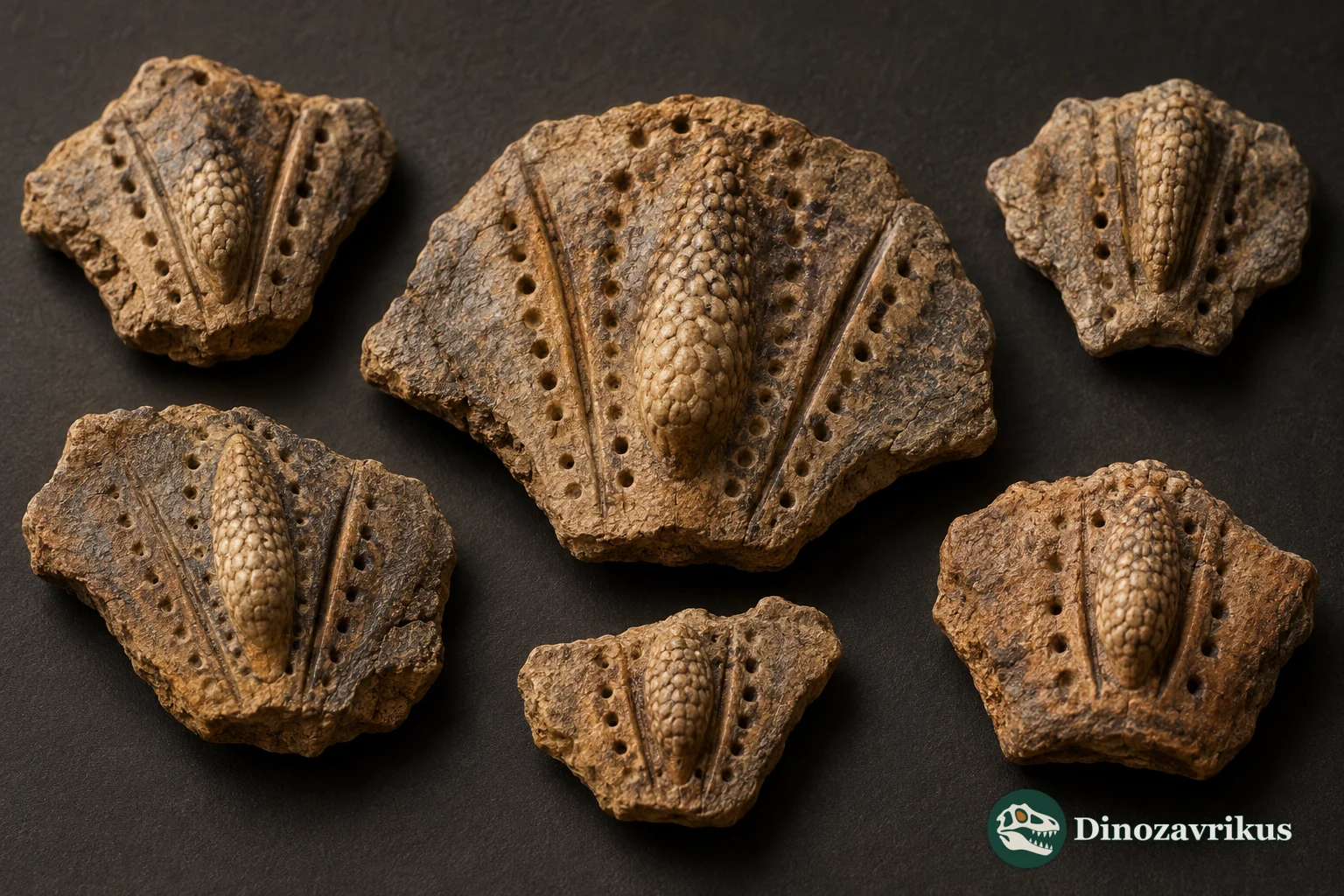
Individual osteoderms preserve a central figure, grooves and small openings. Their combination helps identify the genus but does not measure the whole animal.
SGOPV 3122 preserves portions of movable bands and a pelvic shield of P. chilensis. It is a connected piece of armour, not a complete body outline.
Older work placed Parutaetus among euphractines. A 2026 combined analysis recovered it with Utaetus among early branches of Chlamyphoroidea. This placement is an analytical result.
Ameghino's name and the armour record
Florentino Ameghino named Parutaetus in 1902 from Patagonian fossils. Its type species, P. chicoensis, comes from the Gran Barranca region of Chubut, Argentina. Later studies associate the type series with several osteoderms. The name is tied to that particular material rather than to a complete skeleton assembled from unrelated finds.
A fixed osteoderm carries an elongated main surface figure surrounded by smaller areas. Grooves and small openings differ among species. These are visible bone characters. By contrast, the amount of hair or exact shape of the overlying soft tissue is inferred through comparison with living relatives. Some historically named species have been synonymized and revisited as old material was re-examined.
Connected armour in Chile and scattered plates in Patagonia
The Chilean P. chilensis type, SGOPV 3122, preserves part of the right side of a carapace, including movable bands and a pelvic shield. Its connected plates show their arrangement more securely than a collection of isolated pieces. The anterior armour and most of the body are missing, so its complete silhouette still has to be reconstructed.
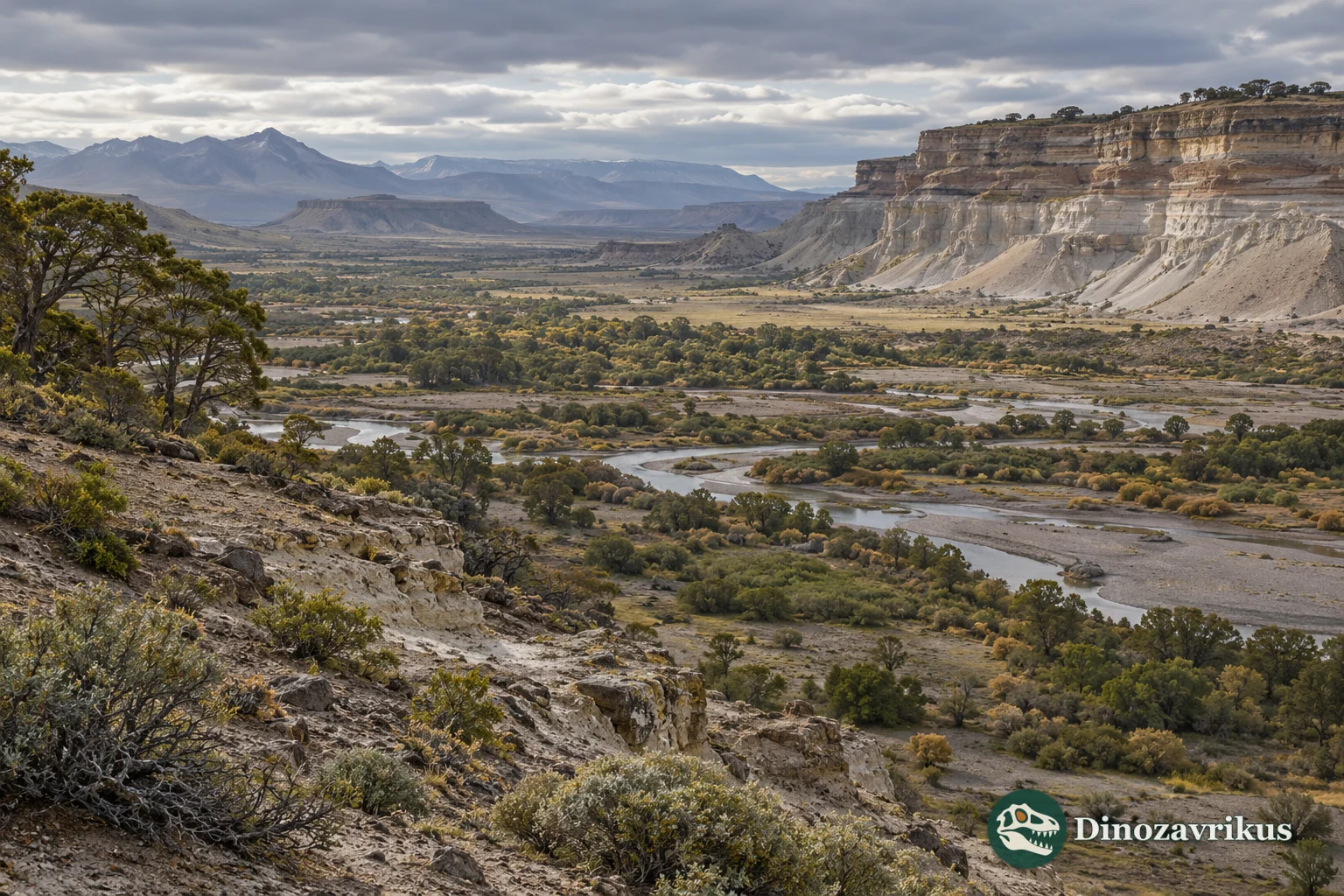
At Barrancas Blancas in Chubut, five unassociated osteoderms, MPEF-PV 2548/1–5, were described as Parutaetus cf. P. chilensis. Their pattern supports a generic identification but not a confident species assignment. They also cannot be assumed to come from one individual. The fossils occur in a broader Paleogene succession whose age is assessed from associated fauna and strata.
New species and internal structure
The northwestern Argentine species P. punaensis was based on associated fixed and movable osteoderms, MLP 83-XI-3-2, from the Geste Formation. Researchers compared the central figure and transverse grooves against other species. Its diagnosis rests on those plate characters, not on an imagined skull or measured body length.
In 2024, researchers named P. oliveirai from Brazil's Guabirotuba Formation. Its type, MCN.P.1317, is a fixed pelvic-shield osteoderm. More numerous surface openings and a distinctive contact zone separate it from previously recognized species. Micro-CT scanning exposed internal cavities and channels. A suggested link between these traits and Eocene cooling is a hypothesis, not a climate measurement from one bone.
Age, classification and life appearance
Fossils assigned to Parutaetus range across middle Eocene to early Oligocene deposits in Argentina, Chile and Brazil. Those sites were not one locality or a single contemporaneous habitat. The age of each occurrence depends on its own layer and geological correlation; the broad range does not fix the exact origin or extinction date of the genus.
Traditionally Parutaetus was included among euphractines. A combined morphological, molecular and stratigraphic analysis published in 2026 instead recovered it with Utaetus near the base of Chlamyphoroidea. Further fossils may test that result. Osteoderms establish armour, but without a skull and more complete limbs they do not provide a secure diet, burrowing depth, body mass or coat colour. The cover is an artistic reconstruction.
Frequently asked questions
What parts of Parutaetus have been found?
Mostly bony armour plates. A Chilean P. chilensis specimen also preserves a connected part of the carapace with movable bands and a pelvic shield.
Can one armour plate identify a species?
Sometimes its combination of characters is informative, but wear and variation can limit confidence. The Barrancas Blancas plates were compared with P. chilensis rather than assigned to it definitively.
Where is Parutaetus known from?
Fossils have been reported from Paleogene deposits in Argentina, Chile and Brazil. This is a record of finds, not an exact map of one simultaneous range.
Is its body mass known?
The plates themselves can be measured, but the available material does not yield a reliable whole-body mass for the genus.