

Prostegotherium was an early South American cingulate known mainly from small bony armor plates. These osteoderms distinguish species by their ridges, grooves and pits, but they do not reveal a complete head or body. A living animal may have resembled a small armadillo; the exact resemblance is a reconstruction.
The genus belongs in the ancient mammal catalogue. Parutaetus provides another early armor comparison. The younger Stegotherium shows how an armadillo-like shell plan persisted across distinct lineages and ages.
Quick facts
| Type species | Prostegotherium notostylopianum Ameghino, 1902 |
|---|---|
| Other named species | P. astrifer Ameghino, 1902 |
| Group | Cingulata, early armadillo-like xenarthrans |
| Age | Early to middle Eocene |
| Type series | MACN 10451, 33 osteoderms |
| Region | Patagonia; related finds in northern Argentina |
What can the fossils tell us?
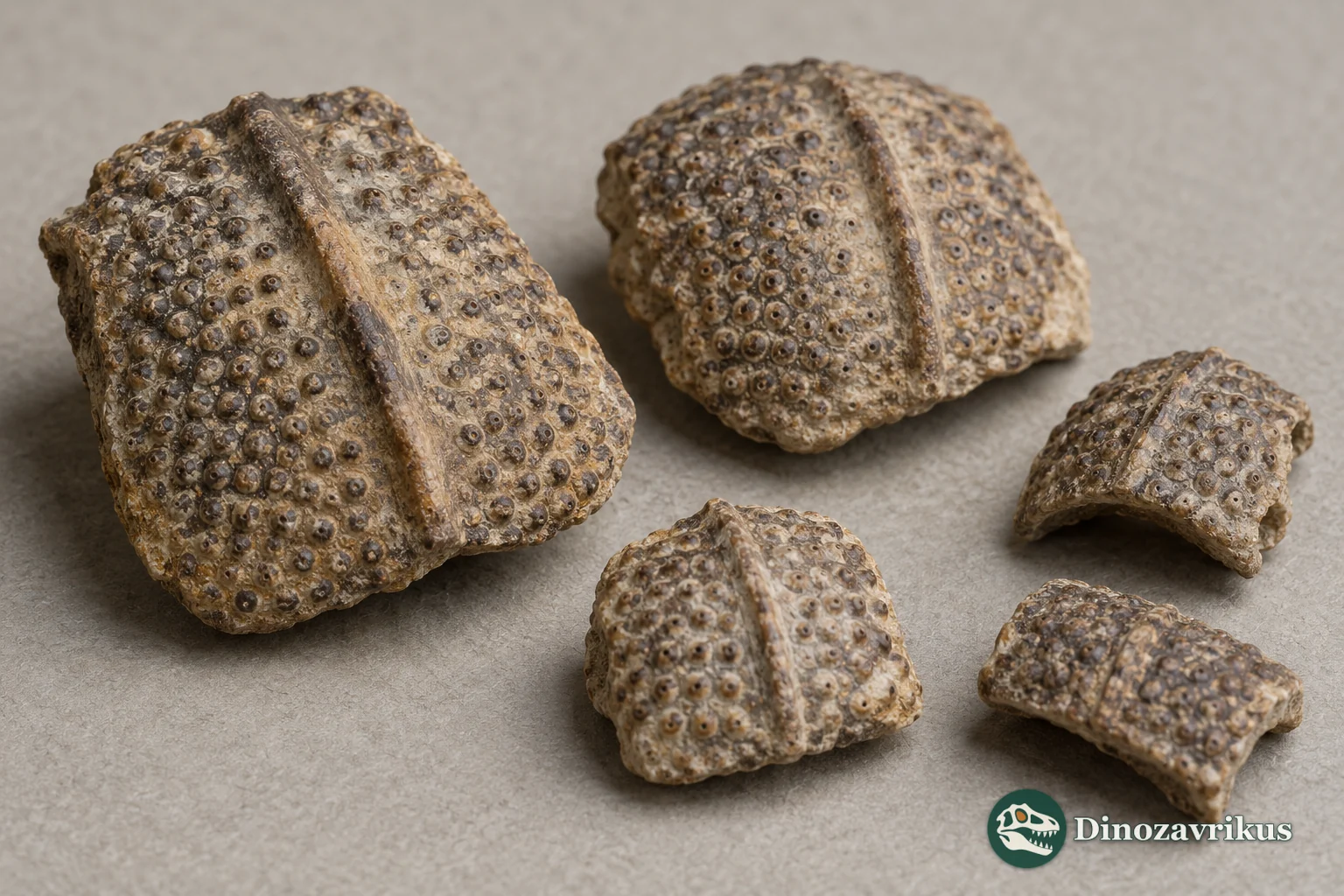
MACN 10451 is a series of P. notostylopianum osteoderms. A later review designated one buckler plate as lectotype. No complete skull or skeleton is established by this type series.
Fixed and movable P. astrifer osteoderms bear a longitudinal keel and a patterned row of small foramina. Their measurements describe individual plates, not the length of the living animal.
Cerro Pan de Azúcar plates are assigned to P. astrifer. Northern Argentine material remains Prostegotherium sp., while older Brazilian comparisons were later transferred to Riostegotherium.
What remains of the type species
Florentino Ameghino named Prostegotherium notostylopianum in 1902 from old Casamayor beds in Patagonia. Collection MACN 10451 comprises 33 osteoderms. A later review chose one central buckler scute as the lectotype. That fixes the name to a reference specimen; it does not transform the entire series into an articulated carapace.
The historical term Casamayor beds and the names of South American land mammal ages refer to fossil assemblages and their correlations. The original plates do not have individual radiometric dates. More carefully recorded finds can clarify the age of particular samples without changing the provenance of the type series.
A second species written in the plates
In P. astrifer, the outer surfaces of osteoderms carry a longitudinal keel and a characteristic arrangement of small foramina around the main figure. Fixed shield plates differ from movable-band plates and cannot be compared as identical parts. At Cerro Pan de Azúcar in Chubut, fixed osteoderm MPEF-PV 10521 measures 12 by 7 mm, while movable plate CPBA 9843 measures 15 by 8 mm. These are dimensions of bones, not the animal's body length.
The number and position of pits, shape of the central figure, strength of the keel and preservation of the edge all matter. A worn isolated scute may only support Prostegotherium sp. rather than a named species.
Patagonian strata and disputed records
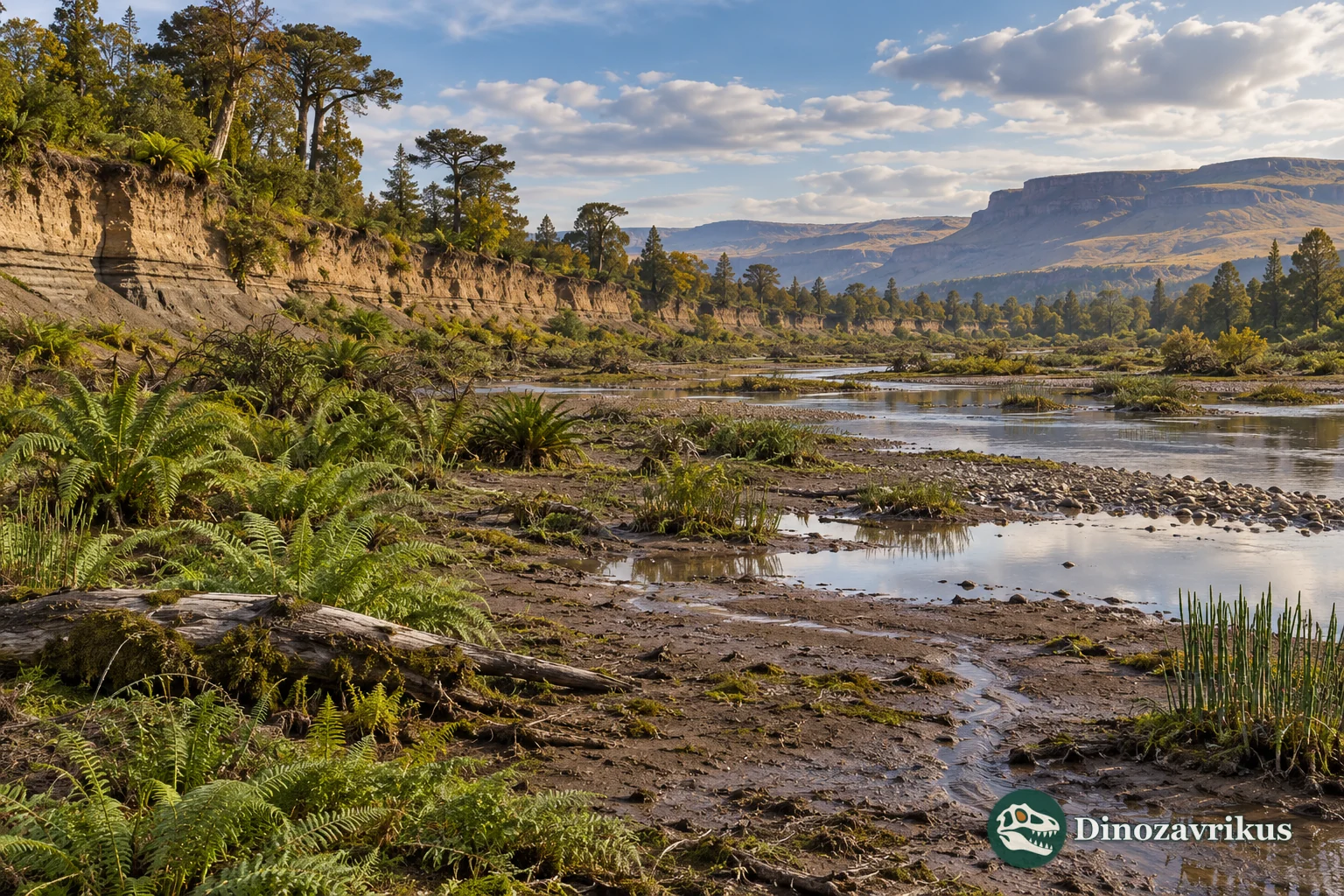
The Cerro Pan de Azúcar material comes from the Las Flores Formation. Its associated fauna is placed in the early to middle Eocene, with a proposed interval of approximately 51 to 45 million years for the assemblage. This is a contextual estimate for the strata, not a direct age measurement on each plate.
Northern Argentina has yielded additional fixed and movable osteoderms, including partly articulated carapace material PVL 6240 from the Quebrada de los Colorados Formation. The investigators used a cautious genus-level assignment. Brazilian plates once compared with P. astrifer were later placed in Riostegotherium, so an old range map should not be reused without checking determinations.
The cover imagines a small armored animal with a pointed muzzle and digging limbs. Plates establish armor but not its skin color, hair density, ears, diet, complete tail or exact body mass. Those features are artistic and comparative choices.
Frequently asked questions
What is the type species of Prostegotherium?
P. notostylopianum, named by Ameghino in 1902. Its type series MACN 10451 contains 33 osteoderms.
How is P. astrifer recognized?
Fixed and movable plates show a longitudinal keel and patterned rows of small pits. New material has been described from Patagonia's Las Flores Formation.
Do we know its skull or body mass?
The type series consists of plates, not a complete skull. A few osteoderm dimensions cannot give a reliable body mass.
Was Prostegotherium found in Brazil?
Brazilian plates once compared with this genus were later assigned to Riostegotherium, so the old identification is not a confirmed Brazilian occurrence.