

Prototherium is an extinct genus of sea cows recorded from Eocene deposits in southern and western Europe. Its fossils include several skulls and isolated skeletal elements from Italy and Catalonia. The best-known material helps compare early dugongid skull anatomy, but no single species is represented by a complete skeleton.
The genus belongs in the ancient mammal catalogue. Its skulls can be compared with the early sirenian Eotheroides and the later North Pacific Dusisiren, while keeping their different ages and fossil records distinct.
Quick facts
| Scientific name | Prototherium de Zigno, 1887 |
|---|---|
| Type species | Prototherium veronense; originally described as Halitherium veronense |
| Group | Sirenia; Dugongidae; early dugongid |
| Age | Middle to late Eocene, depending on species and locality |
| Range | Southern and western Europe, especially Italy and Catalonia |
| Type locality | Monte Duello, Veneto, Italy |
| Key specimen of P. ausetanum | Partial skull IPS81881a from Tona, Catalonia |
| Main limitation | Species boundaries and some historical referrals remain uncertain |
What do the Prototherium fossils show?
The partial skull IPS81881a from Tona is the holotype of P. ausetanum. Its proportions and anatomical details support comparison with other sirenians, but the specimen does not preserve a complete skeleton.
Historical collections from Monte Duello include skulls, vertebrae, ribs and other remains. Two skulls assigned to P. veronense are held in Padua. They are separate specimens, not parts proven to belong to one individual.
The Tona skull and later Catalonian discoveries add cranial and fragmentary postcranial evidence. A label such as Prototherium cf. ausetanum records resemblance to that species, not a definitive identification.
Researchers have differed over the placement of P. intermedium, P. montserratense and some referred material. Taxonomic revisions compare name-bearing specimens; a genus list should not turn every historical combination into an equally secure species.
The name and the Monte Duello fossils
Achille de Zigno described sirenian fossils from Monte Duello in Veneto during the 1870s. He initially placed the material in Halitherium, naming H. veronense. De Zigno established Prototherium in 1887, and P. veronense became its type species. The revised combination refers to the same name-bearing taxon, not a newly discovered animal.
His collection records associate the material with quarry work around Monte Duello. Four skulls were reported from the area; two assigned to P. veronense remain in Padua. Vertebrae, ribs and other elements have also been attributed to the locality. Their shared provenance does not by itself demonstrate that they were articulated or belonged to one individual.
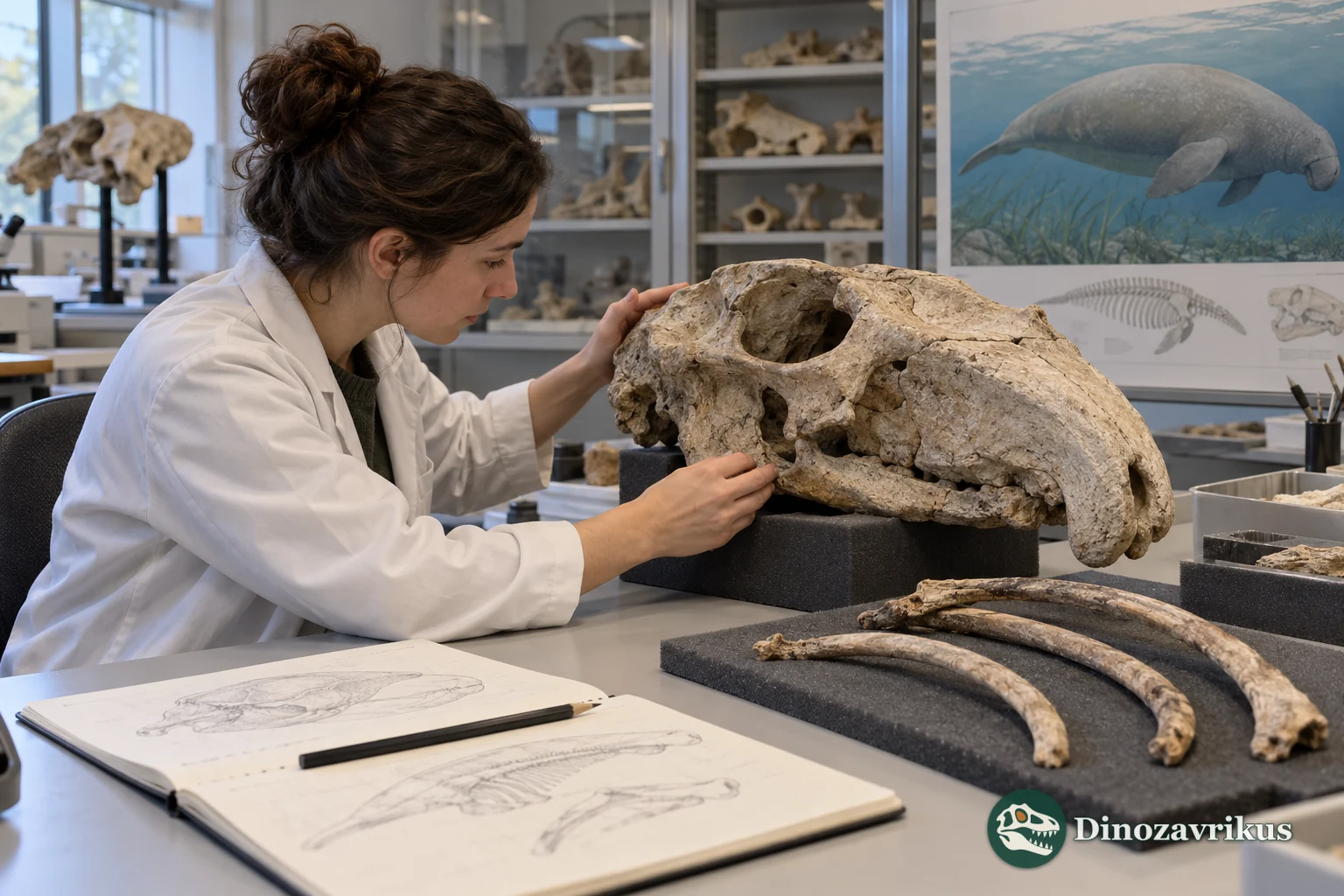
Prototherium ausetanum and the Tona skull
Prototherium ausetanum was described from the Mas Vilageliu locality near Tona in Catalonia. Its holotype, IPS81881a, is a partial skull; associated descriptions also mention fragmentary postcranial remains. The cranial anatomy is the main basis for distinguishing the species from other Eocene sirenians.
Later finds from Girona province have been compared with P. ausetanum. Where authors use cf., they indicate a close resemblance while leaving the identification open. That distinction matters because isolated or fragmentary bones may not preserve the characters needed to assign them securely to a named species.
The available material is uneven among localities. The Tona skull supports detailed cranial comparisons; scattered bones from elsewhere extend the record only where their diagnostic features allow. No full-body reconstruction can be treated as a direct portrait of a known specimen.
Species names and uncertain assignments
The most consistently discussed species are the Italian type species P. veronense and Catalonian P. ausetanum. Other historical names require caution. A 2016 review treated P. intermedium as probably belonging to another genus, while the status of P. montserratense was considered doubtful pending reassessment of its material.
These judgements are taxonomic proposals, not a universal synonym list. A name can remain in older literature even when later authors question whether its type is diagnosable or belongs in Prototherium. The safest comparisons identify the specimen and the revision being followed rather than silently combining every record under one species.
Because the type species is based on Italian material and the best-known newer species on a Catalonian skull, the genus spans more than one fossil assemblage. Geographic proximity within Europe does not prove that the animals formed a single population or shared identical ecology.
Anatomy, habitat and limits of reconstruction
As sirenians, prototheres were aquatic herbivorous mammals. Seagrass feeding is a reasonable ecological interpretation for a sea cow, but a reconstructed meal is not direct evidence from the fossils described here. The skulls establish anatomy; they do not preserve stomach contents, exact feeding behaviour or seasonal movements.
The marine sediments and associated fossils at each locality provide the environmental context. They should be considered separately rather than used to assign one precise habitat to every species in the genus. No secure genus-wide body-length or mass estimate follows from the partial skulls and scattered bones alone.
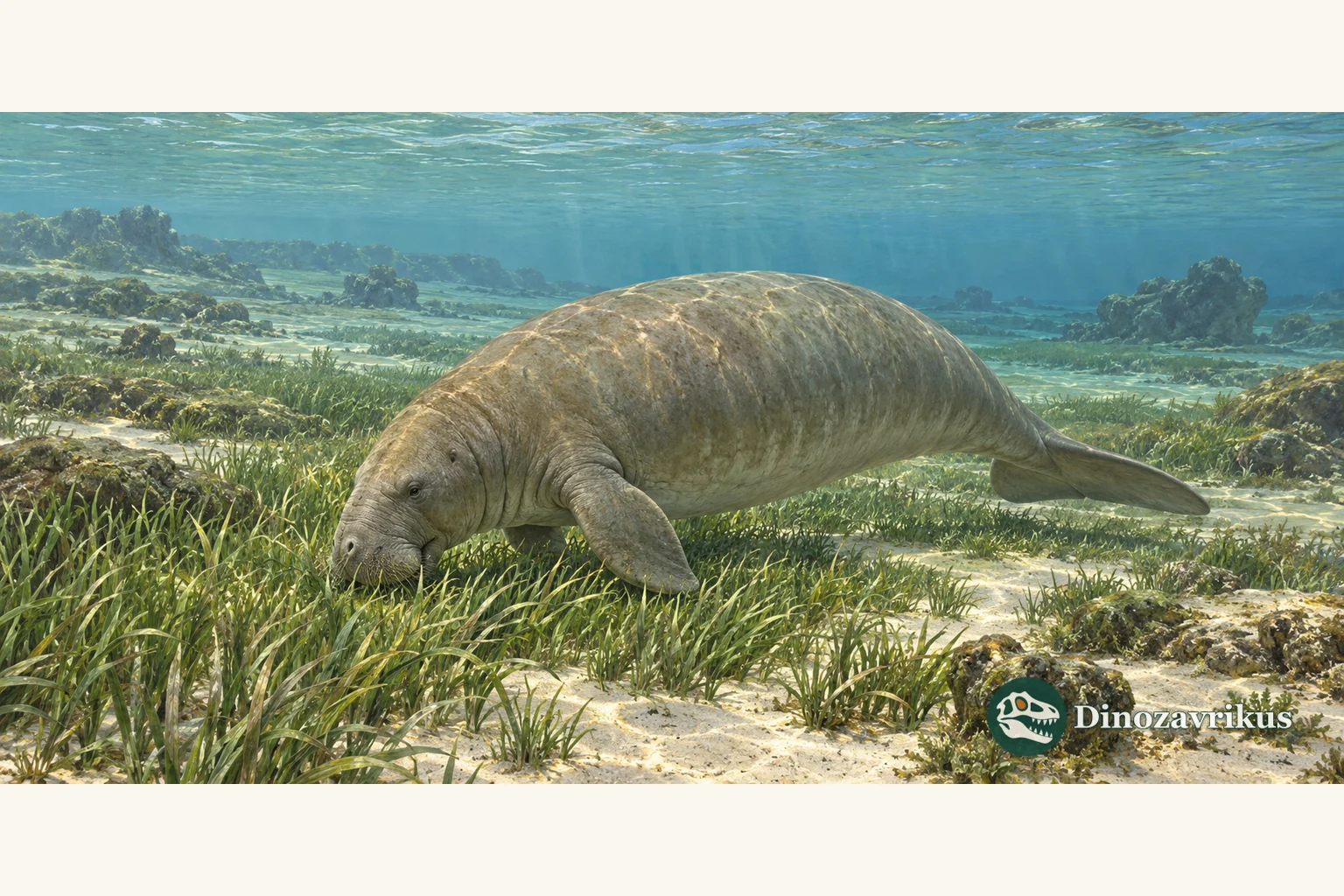
The fossils place Prototherium among the early European sea cows and document useful cranial comparisons. They leave its exact species diversity, the identity of some referrals and much of its body anatomy unresolved.
Frequently asked questions
When did Prototherium live?
The genus is reported from middle- and late-Eocene deposits, but the age depends on the species and locality rather than one single dated population.
Where was Prototherium veronense found?
The type species is associated with Monte Duello in Veneto, Italy. Its fossil record includes skulls and separate skeletal elements.
What is the best-known fossil of Prototherium ausetanum?
Its holotype is the partial skull IPS81881a from near Tona in Catalonia. It supports cranial comparisons but is not a complete skeleton.
Are all named Prototherium species equally secure?
No. Later revisions have questioned some historical assignments, including the placement or validity of P. intermedium and P. montserratense. The conclusions depend on the diagnostic quality of their type material.