

Scolopodus is a conodont genus known mainly from isolated microscopic phosphatic elements. Once described as “teeth,” these fossils are now treated as parts of the feeding apparatus of small jawless chordates. The evidence must be read at two levels: what an individual element shows, and what researchers could reconstruct for a particular species.
Christian Pander introduced the name in 1856 from material in the Baltic region. He designated S. sublaevis as the type species, but a later revision could not recognise that form in its studied collections. Better-known S. striatus from the Lower Ordovician provides a case study in how isolated elements can be associated. The catalogue also includes related forms such as Paroistodus and Drepanodus.
Quick facts
| Scientific name | Scolopodus Pander, 1856 |
|---|---|
| Group | Conodonts; jawless chordates known mainly from feeding elements |
| Type species | Scolopodus sublaevis Pander, 1856 |
| Studied apparatus | Five morphotypes in S. striatus |
| Age | Lower Ordovician for the studied S. striatus material |
| Evidence | Isolated phosphatic elements, not a genus-level body skeleton |
| Taxonomic issue | The validity of the type species remains doubtful |
| Limit | The five-element model cannot be applied to every species |
What can the fossils tell us?
Christian Pander established Scolopodus in 1856 and designated S. sublaevis as its type species. Tolmacheva did not recognise that form in the collections she studied and considered its validity questionable. This is a naming problem, not evidence that the sampled conodonts were absent.
Tolmacheva grouped acontiodiform, subrounded, compressed paltodiform, paltodiform and scandodiform elements in the apparatus of Lower Ordovician S. striatus. Shape and asymmetry of the bases supported the association. The reconstruction applies to this species, not automatically to the whole genus.
Tolmacheva reassessed Pander's named element forms from the St Petersburg type area. Apart from S. sublaevis, she treated them as one species later called S. rex, and proposed the older name S. striatus as its senior synonym. Older literature may retain the former usage.
A conodont element shows its cusp, base, cavity and ornament. Joining elements into an apparatus requires a recurring, supported association. These fossils alone do not show body shape, diet, swimming speed or colour.
From Pander's names to a revision
Pander described several form species of Scolopodus from material around St Petersburg. In 2006 Tatiana Tolmacheva examined a new collection from the same type area, including material near Popovka. She assigned Pander's forms, except the type species S. sublaevis, to one species later named S. rex. For the more recognisable S. striatus, she proposed senior-synonym status over S. rex.
The validity of S. sublaevis remained questionable because Tolmacheva did not recognise it among the material she studied. This does not make all modern Scolopodus records unidentifiable. It means the type name cannot yet be confidently matched to one well-diagnosed set of elements. Older species lists therefore need to be checked against the material and diagnosis.
What an element can show
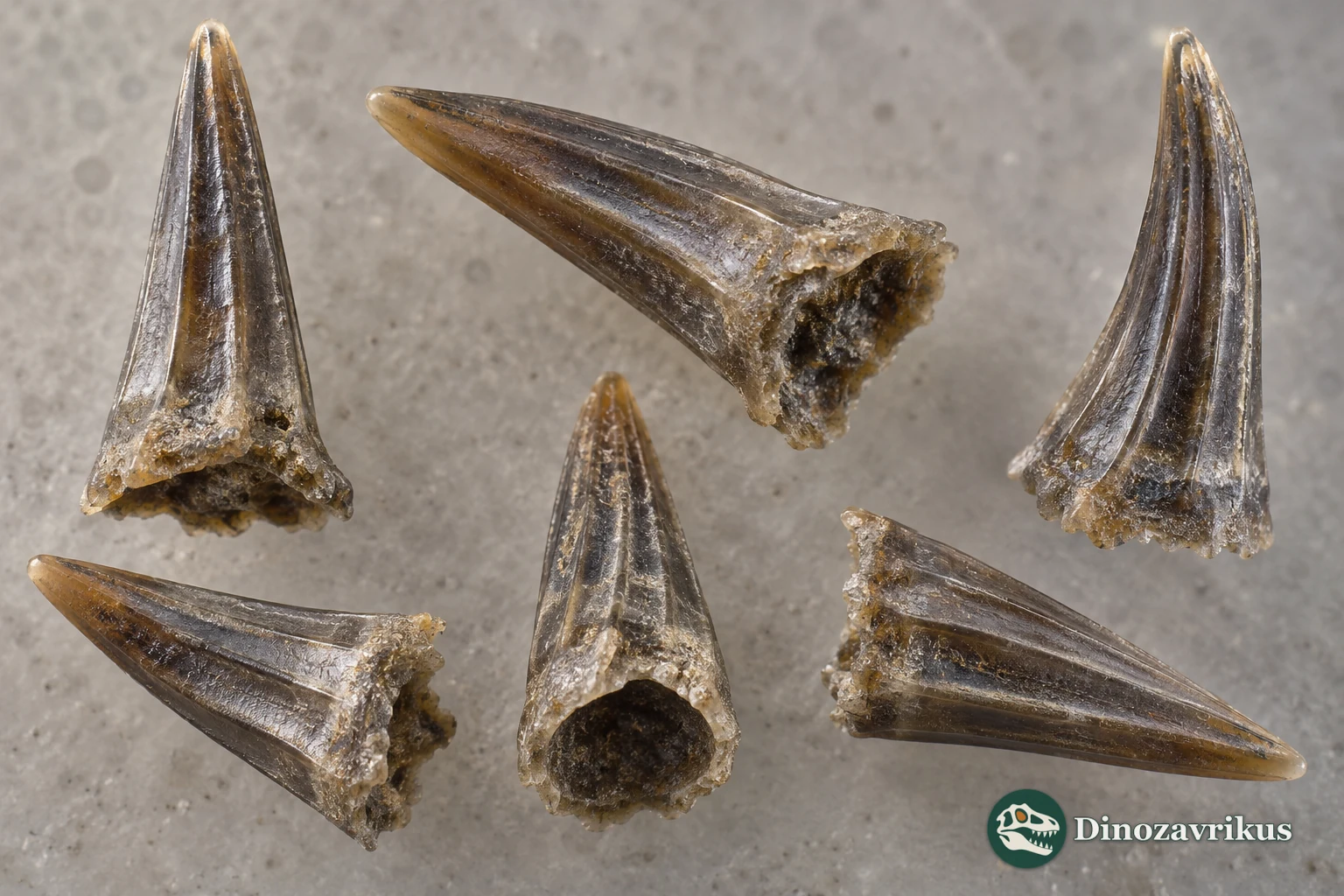
Conodont elements are phosphatic fossils. Researchers examine the cusp, base, basal cavity, lateral compression, asymmetry and longitudinal costae. These characters distinguish forms, but a single isolated element does not always reveal its position in the complete apparatus.
For Lower Ordovician S. striatus, Tolmacheva associated five morphotypes: acontiodiform, subrounded, compressed paltodiform, paltodiform and scandodiform. The proposed association uses element asymmetry and the shape of the bases, while variation forms a continuous series in basal-cavity depth, height and lateral compression. The boundaries between forms cannot be set by one feature alone.
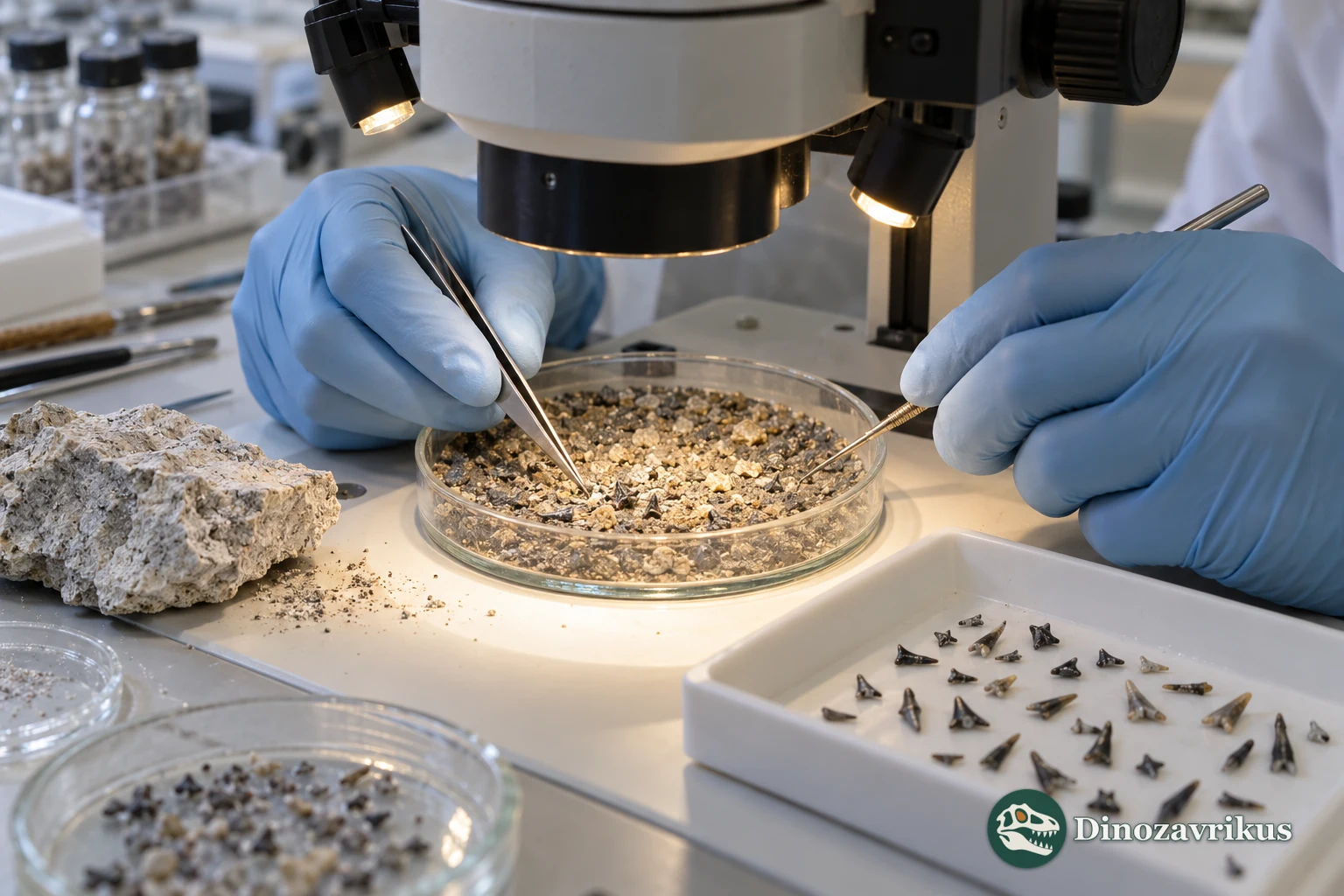
The five-part reconstruction belongs to S. striatus, not automatically to every species in the genus. Other forms may have a different element set. Later studies also discuss whether species with a geniculate element should remain in Scolopodus. The classification has changed as palaeontologists moved from isolated form names toward multielement species.
Age and geographic context
The detailed study of S. striatus uses Lower Ordovician sections in the East Baltic and collections near St Petersburg, the historical centre of Pander's early conodont work. Some illustrated Estonian material is assigned to the Baltoniodus navis Zone. That age applies to the studied collections and species; it should not be transferred to every occurrence listed under the broad genus name.
Conodont elements commonly survive after the surrounding limestone is dissolved, so researchers can recover them from small rock samples. Their durable phosphatic form and changing distributions make conodonts useful in biostratigraphy. Dating a rock layer and reconstructing the animal are different tasks: a useful index fossil may still preserve no complete body or soft tissue.
The animal behind the microfossils
Rare soft-body fossils from other conodonts have informed the broader biology of the group. They do not justify assigning a particular body shape to Scolopodus without a specimen linked to this genus. The evidence considered here consists primarily of disarticulated elements.
A role in capturing and processing food is inferred from repeated element shapes and their arrangement in reconstructed apparatuses. These specimens do not establish the exact diet, body length, swimming speed, depth range or seasonal movement of Scolopodus. Macro illustrations enlarge the fossils to show their surfaces; the natural elements in published studies use scale bars measured in hundreds of micrometres. Image colour is illustrative rather than a preserved biological signal.
Frequently asked questions
Is Scolopodus an animal or a set of teeth?
It is a genus of conodont animals. The fossils are phosphatic feeding elements of small jawless chordates, not teeth from a jawed fish.
Why is the type species Scolopodus sublaevis uncertain?
Tolmacheva did not recognise the form in the collections she studied and questioned its validity. Better-known S. striatus has its own diagnostic evidence.
How many element types were found in Scolopodus striatus?
Tolmacheva associated five morphotypes in the apparatus of S. striatus. The result should not be applied to every species in the genus.
When did Scolopodus live?
The detailed S. striatus apparatus comes from Lower Ordovician material in the East Baltic. Broader genus-level ranges depend on which species and element forms are accepted.