

Stenotatus was an extinct South American armadillo in the eutatine group. It is usually identified from bony armour plates: movable osteoderms often have three longitudinal ridges. Its species boundaries remain unsettled, and the type specimen of S. patagonicus, the type species, is considered lost.
The genus lived alongside larger armadillos such as Proeutatus and belongs in the ancient mammal catalogue. The later Chasicotatus helps show how South American eutatines changed through the Cenozoic.
Quick facts
| Scientific name | Stenotatus Ameghino, 1891 |
|---|---|
| Type species | S. patagonicus, first described as Euphractus patagonicus |
| Group | Mammalia, Xenarthra, Cingulata; Eutatini |
| Age | Late Oligocene to Early Miocene; some records are younger or tentative |
| Range | South America, especially Argentina and Patagonia |
| Main evidence | Movable and fixed osteoderms; some jaws and limb bones |
| Estimated mass | A Santa Cruz sample mean of about 3.72 kg |
| Taxonomic caveat | The type specimen of S. patagonicus is considered lost |
What can the fossils tell us?
Researchers compare the central figure, lateral ridges, grooves and foramina. A plate’s position in the carapace matters, so homologous elements must be compared.
Historical names include Euphractus patagonicus and Dasypus patagonicus. Later authors interpreted referred material against the original description; not every old assignment has been rechecked.
Santa Cruz studies recognize S. patagonicus and S. hesternus; broader treatments also discuss S. planus, S. centralis and S. ornatus. The differences reflect regional sampling and continuing systematic work.
A comparative study estimated a mean of about 3.72 kg for the Santa Cruz sample and found limb proportions consistent with digging ability. They do not show extreme burrowing or specific behaviour.
The name and early classifications
Florentino Ameghino established Stenotatus in 1891. Its type species is S. patagonicus, which Ameghino had named in 1887 as Euphractus patagonicus. A later combination, Dasypus patagonicus, also appears in the literature. These are successive classifications of a named fossil form, not three separate species.
Catalogues report that the original type specimen of S. patagonicus is lost. This makes the name harder to apply: later specimens must be compared with the early description and with diagnostic features preserved in other material. The name Stenotatus karaikensis also appears in historical synonymies and collection records. Such records should be read in the context of the particular taxonomic review, because not every old identification has been re-examined against a surviving type.
Armour and diagnostic anatomy
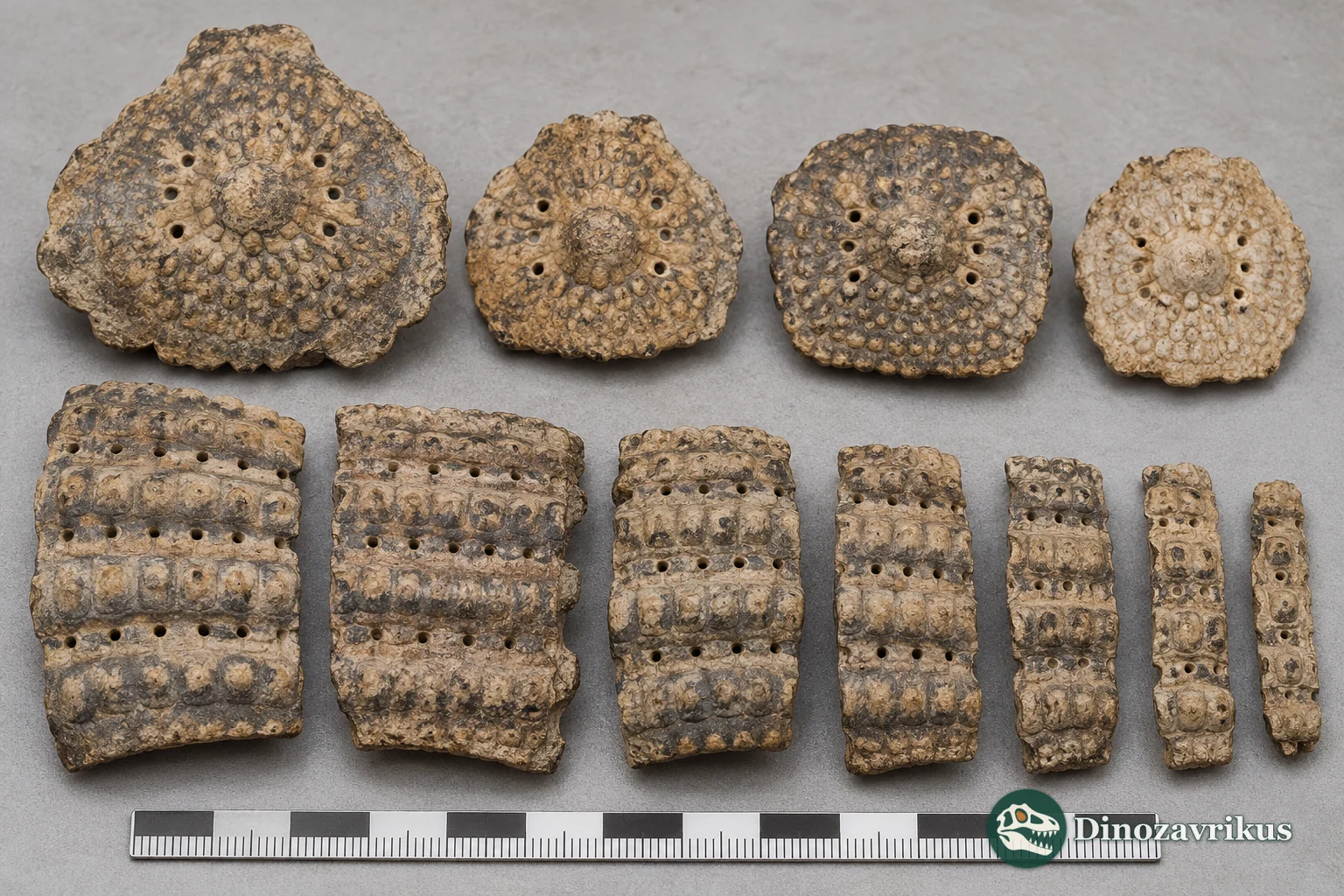
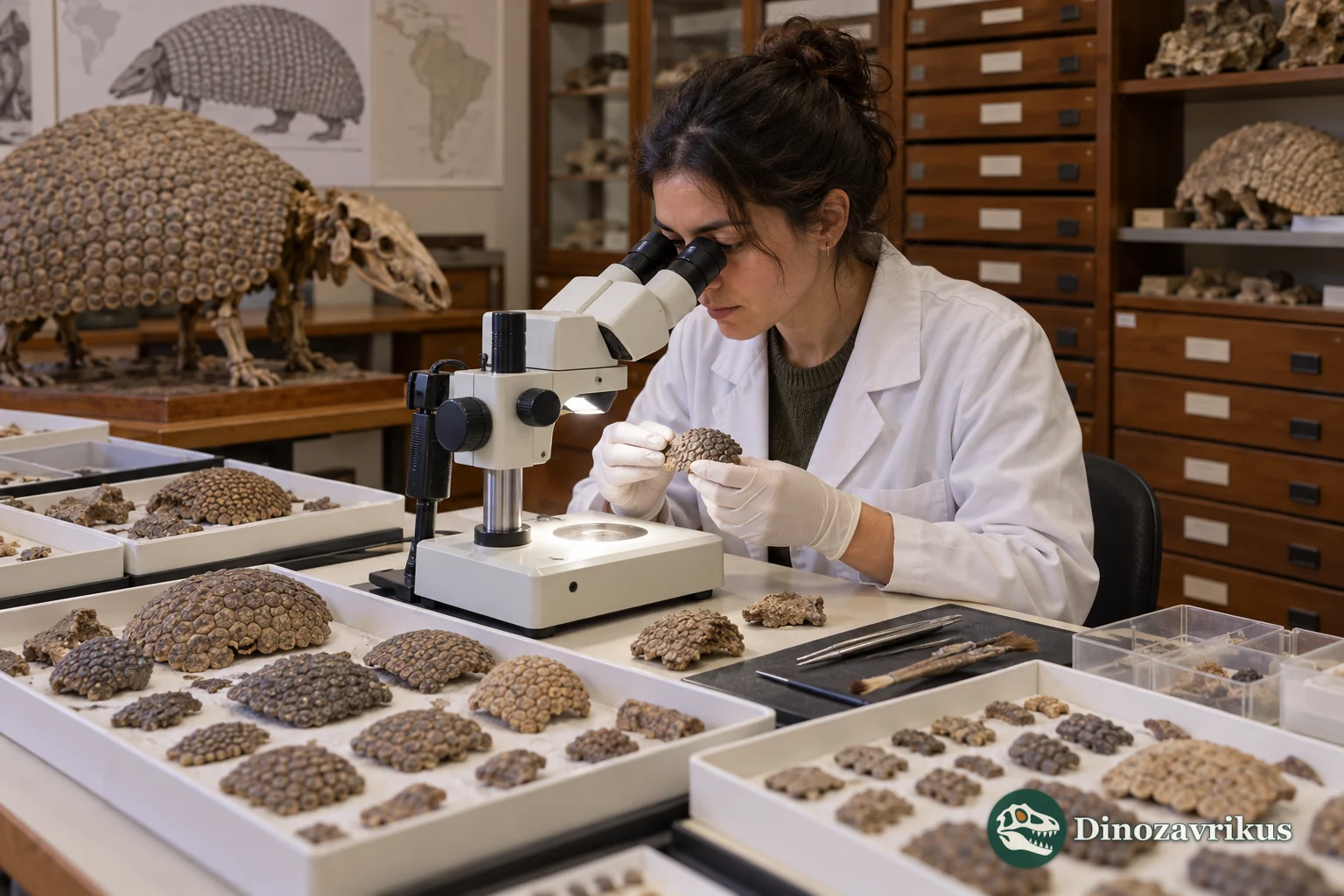
Osteoderms, the bony plates embedded in the skin, are the main evidence for the genus. Movable plates from the dorsal bands commonly show three raised longitudinal figures separated by grooves. Researchers also compare the shape of the central figure, ridges, marginal hair foramina and plate proportions.
Armour plates differ across the carapace. A movable band osteoderm should not be compared without qualification to a fixed plate from the pelvic shield or to a tail element. Species diagnoses are stronger when they compare homologous elements and multiple specimens; an isolated plate often supports identification only to genus or tribe.
In the Santa Cruz material assigned to S. patagonicus, movable plates have been measured at about 17.6–21.1 mm long and 5.3–7.3 mm wide. These figures describe particular osteoderms, not the full length of the animal. Published comparisons place them between the smaller Prozaedyus and the larger Proeutatus.
Species and geological range
Some studies of the Santa Cruz Formation recognize S. patagonicus and S. hesternus. Broader lists also discuss S. planus, S. centralis and S. ornatus. Their reported ranges extend from the Late Oligocene into the Early Miocene, with some interpretations reaching younger levels. The species are not all supported by the same anatomical material or equally detailed comparisons.
Late Oligocene S. ornatus from Patagonia illustrates this uncertainty. One researcher proposed that it may belong in a separate genus, but that suggestion was not formally established as a new combination in the work that discussed it. It continued to be treated as Stenotatus ornatus while its generic placement remained an open question.
Fossils from the Cerro Boleadoras Formation and other South American sections may be identified as Stenotatus cf. planus or Stenotatus sp. “cf.” indicates resemblance with unresolved identification; it is not confirmation at species level.
Size, movement and diet
A comparative study estimated a mean body mass of about 3.72 kg for the Santa Cruz sample of Stenotatus. The value was calculated from limb-bone dimensions using allometric equations and indices modelled on living armadillos. It describes a studied sample and depends on the comparative model selected.
Forelimb proportions are consistent with a general ability to dig, as in many living armadillos. The measured proportions do not indicate the extreme specialisation of highly fossorial or fast-running forms. They cannot reveal how often an individual dug, what its burrow looked like or how it behaved day to day.
Teeth and jaws are less thoroughly represented than the armour. A broad study of Santacrucian armadillos considered generalized omnivory plausible across many taxa, while linking clearer herbivorous specialisation to Proeutatus and Peltephilus. That group-level interpretation should not be transferred automatically to Stenotatus.
Habitat and coexistence
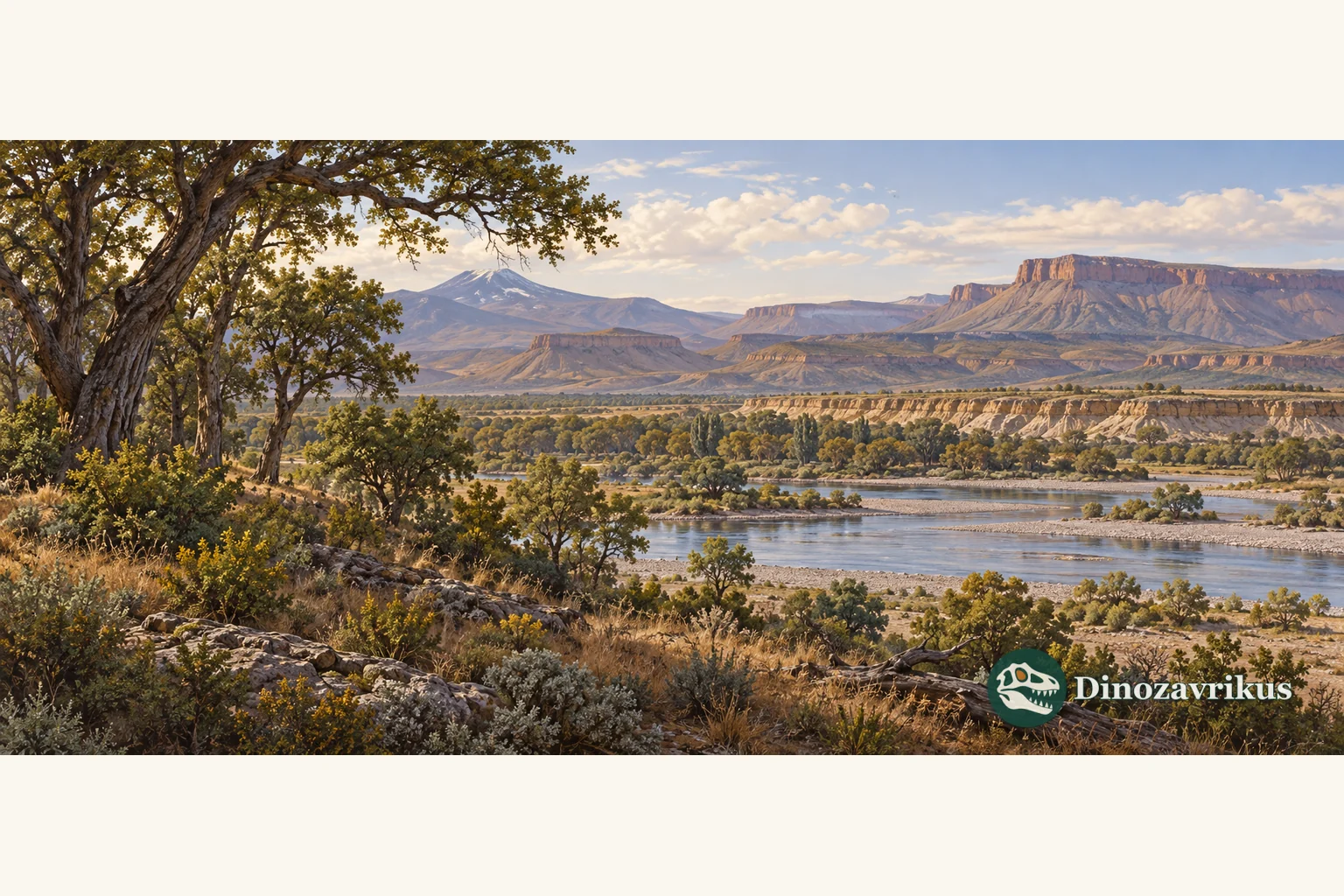
Early to Middle Miocene Patagonia supported a rich mammal community. More than seventy vertebrate species have been reported from a series of levels in the Santa Cruz Formation. Its armadillos included several genera of different body sizes and armour patterns. Their presence in the same region does not require identical diets or behaviour.
Stenotatus has been reported from eastern and western areas of the formation. Such distributions help compare fossil faunas and stratigraphic levels, but incomplete preservation cannot map every population or prove uninterrupted occupation of the entire region.
What the plates establish
Osteoderms document a bony carapace and provide useful diagnostic features. Limb bones inform estimates of body mass and digging ability. The lost type specimen, changing species lists and frequent genus-level identifications limit some conclusions. Coat, colour, soft-tissue details and behaviour remain reconstructions rather than direct fossil observations.
Frequently asked questions
When did Stenotatus live?
Most well-studied material comes from the Late Oligocene and Early Miocene of South America. Younger ranges depend on particular species and tentative identifications.
How are its armour plates identified?
Researchers compare the three longitudinal ridges on movable plates, their grooves, surface figures and foramina. The position of a plate on the carapace matters.
Why does the lost type specimen matter?
A type anchors the use of a scientific name. Because the S. patagonicus type is considered lost, later identifications rely on the original description and comparisons with referred specimens.
How heavy was Stenotatus?
The Santa Cruz sample has a mean estimated mass of about 3.72 kg, calculated from limb bones and comparative models.