

Sveltonectes insolitus was an ichthyosaur from the Late Barremian of western Russia. Its nearly complete, three-dimensionally preserved skeleton includes much of the skull and limbs. Small pointed teeth and extra digits in the hindfins distinguish the specimen, but they do not reveal a measured swimming speed or a complete body length.
Quick facts
| Type species | Sveltonectes insolitus Fischer, Masure, Arkhangelsky & Godefroit, 2011 |
|---|---|
| Age | Late Barremian, Early Cretaceous |
| Locality | Ulyanovsk region, western Russia |
| Holotype | IRSNB R269, a nearly complete three-dimensional skeleton |
| Notable anatomy | Small pointed teeth and accessory digits in the hindfins |
| Size | The description gives a 59 cm jaw length; total body length is unknown |
Evidence guide
IRSNB R269 preserves most of the skeleton in three dimensions. The right side of the skull is damaged, and some parts require reconstruction. The evidence comes from one individual, not a growth series.
The authors identified a dinocyst assemblage in the marl matrix associated with the holotype and assigned it to the Late Barremian. This dates the fossil-bearing sediment biostratigraphically; it is not a direct measurement of the bone's age.
The described teeth are small and pointed, with some crowns curving backwards. The authors inferred a possible diet of small soft-bodied prey, but no stomach contents or prey remains are known for the holotype.
The hindfin has three main digits plus one accessory digit on each side. This anatomy is useful for comparison with other ichthyosaurs, but it does not by itself measure speed or manoeuvrability.
A named species based on one skeleton
Valentin Fischer, Edwige Masure, Maxim Arkhangelsky and Pascal Godefroit named the genus and species in 2011. The holotype, IRSNB R269, is held by the Royal Belgian Institute of Natural Sciences. It is nearly complete and three-dimensionally preserved, although the right side of the skull is damaged and parts of the skeleton are distorted.
The genus name combines Greek roots associated with agility and swimming. The authors connected the name to their interpretation of the animal's streamlined head and limb attachments. That explanation is a naming rationale, not a measurement of locomotor performance. The epithet insolitus means unusual and refers to the combination of anatomical features described in the specimen.
The original diagnosis listed eleven features across the skull, teeth and postcranial skeleton. Some are distinctive in combination rather than unique in isolation, and preservation varies across the holotype. A diagnostic list identifies a fossil taxon; it does not mean that every listed feature is equally clear or independently unique.
Late Barremian rocks of western Russia
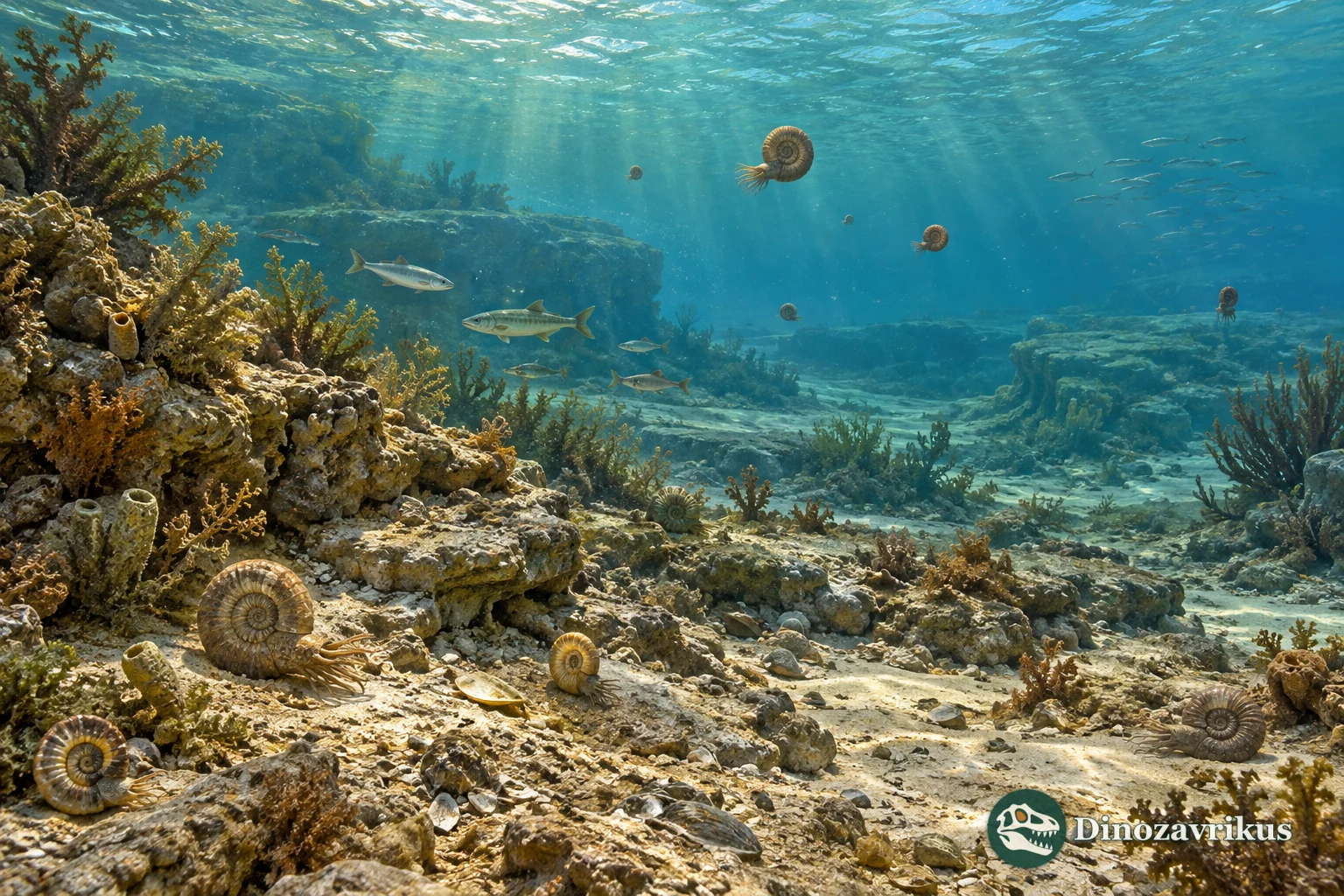
The holotype came from the Ulyanovsk region of western Russia. The description assigns it to the Late Barremian, part of the Early Cretaceous, but the available account does not identify a formation or a precisely surveyed outcrop. The locality should therefore remain at regional scale.
The authors extracted dinocysts from the fine-grained matrix associated with the skeleton. Their assemblage supported a Late Barremian age. This is a biostratigraphic inference from microfossils in the sediment, not a radiometric date taken from the bone. A later regional study also reported Late Barremian palynomorphs for the holotype.
Other ichthyosaurs from the wider Volga region help compare fossils across time. Simbirskiasaurus is associated with an earlier Barremian interval, while Leninia is Aptian. These records do not establish that the animals lived together or came from the same bed.
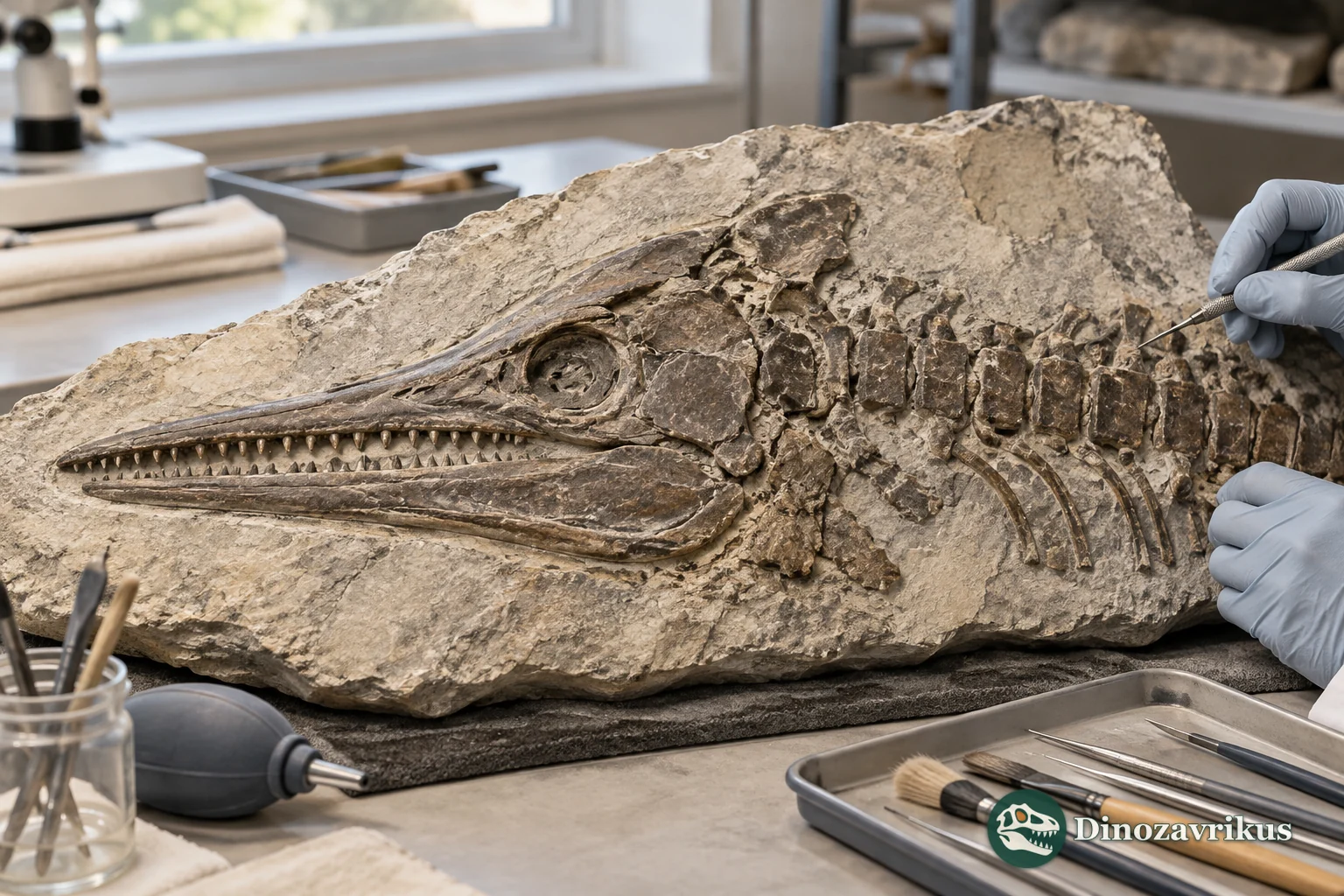
Teeth, skull and extra hindfin digits
The skull combines a long rostrum with a distinctive narial region. The diagnosis includes a bony pillar separating parts of the external narial opening, a foramen in the prootic, a deep depression on the basioccipital and features of the pterygoid. These are observations about preserved bones; they do not directly reveal soft tissues or sensory abilities.
The teeth are small, slender and sharply pointed, with some crowns curved backwards. The authors used a tooth-to-jaw proportion in diagnosing the animal. The published table gives a jaw length of 59 cm; that measurement concerns part of the skull, not the full body. Neither tooth shape nor jaw length establishes bite force or a particular prey item.
The hindfins preserve three main digits and one accessory digit on both the preaxial and postaxial sides. The authors also described four elements in the hindfin zeugopodial row. This arrangement gives a useful anatomical comparison with other ophthalmosaurids, including Platypterygius, but it is not a direct record of swimming style.
What anatomy can suggest, and what it cannot
The 2011 authors proposed that the pointed teeth could have helped seize small, soft-bodied prey such as fish or cephalopods. They also discussed possible manoeuvrability in light of limb attachments and vertebral proportions. These are functional interpretations from anatomy. The holotype preserves no stomach contents, prey remains or direct trace of swimming behaviour.
Several features led the authors to regard the holotype as adult, including ossified phalanges, fusion in parts of the skull base and developed muscle attachments. They also noted that some aspects of the humerus might indicate that ossification was not fully complete. One skeleton cannot establish the full size range or growth rate of the species.
The published jaw measurement is 59 cm, but the skeleton does not provide a secure total body-length estimate. Colour, skin, exact body outline and movement in the cover are artistic reconstruction.
Frequently asked questions
Where was Sveltonectes found?
The holotype came from the Ulyanovsk region of western Russia. The published account does not establish a precisely surveyed outcrop or a named formation.
What is preserved in the holotype?
IRSNB R269 is a nearly complete skeleton preserved in three dimensions. The right side of the skull is damaged, but substantial cranial, vertebral and limb material is available.
What is unusual about its hindfins?
Each hindfin has three main digits plus preaxial and postaxial accessory digits. This is an anatomical observation, not a measurement of swimming speed.
How large was Sveltonectes?
The description reports a 59 cm jaw length, not a total body length. The available holotype does not support a reliable full-body measurement.