

Wahlisaurus massarae is an Early Jurassic ichthyosaur from Nottinghamshire, England, named after a partial skull and incomplete skeleton that had entered a museum collection decades before its scientific description. A long, slender snout and an unusual coracoid help distinguish it. A second specimen is a single coracoid from Somerset near the Triassic–Jurassic boundary, whose precise age is uncertain.
Quick facts
| Type species | Wahlisaurus massarae Lomax, 2016 |
|---|---|
| Age of holotype | Lowermost Hettangian, Early Jurassic |
| Locality | Near Normanton on Soar, Nottinghamshire, England |
| Holotype | LEICT G454.1951.5, partial skull and incomplete skeleton |
| Referred specimen | BRSMG Cg2405, an isolated right coracoid from Somerset |
| Known anatomy | Slender rostrum, overbite and distinctive coracoid features |
Evidence guide
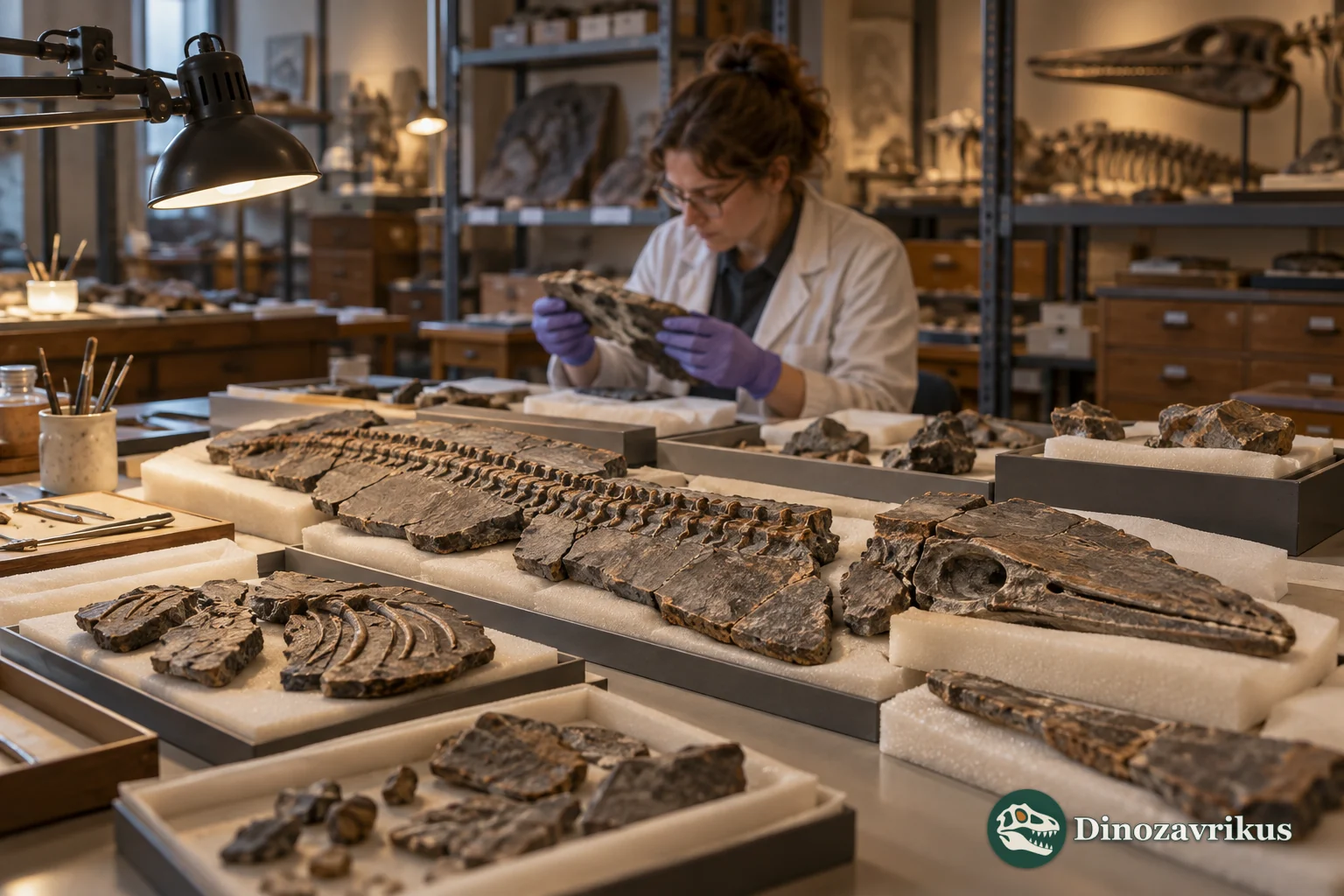
LEICT G454.1951.5 preserves part of the skull, pectoral and pelvic bones, partial hindfins, vertebrae and ribs. It is incomplete and cannot provide a direct full-body measurement.
The original diagnosis notes a slender snout, a lower jaw shorter than the upper jaw, and a distinctive combination of openings and notches on the coracoid. These are skeletal observations, not direct evidence of speed or diet.
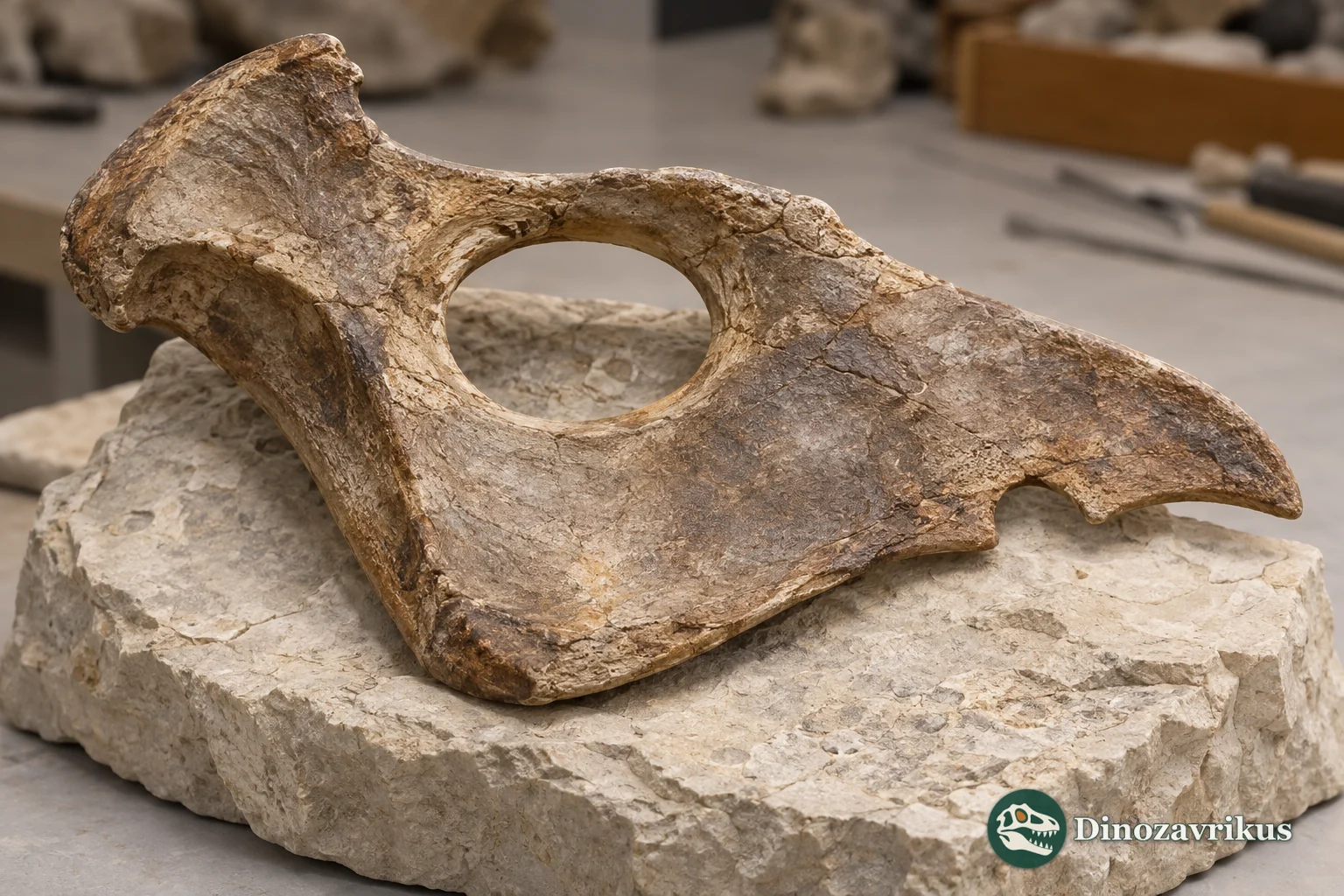
BRSMG Cg2405 is a nearly complete right coracoid. It is about 20% longer anteroposteriorly than the corresponding holotype bone, supporting a larger individual but not a total body-length estimate.
The holotype is lowermost Hettangian. The Somerset coracoid comes from a level near the Triassic–Jurassic boundary, interpreted as probably latest Rhaetian; the authors retain stratigraphic uncertainty.
A museum fossil described decades later
Holotype LEICT G454.1951.5 came from near Normanton on Soar in Nottinghamshire. Leicester's New Walk Museum acquired the fossil in 1951. Parts of the skeleton were later on long-term loan to ichthyosaur specialist Robert Appleby and returned to the museum after his death in 2004. Dean Lomax noticed unusual features when he examined the specimen during a museum visit.
Lomax named Wahlisaurus massarae in a paper published online in 2016 and in the 2017 issue of the Journal of Systematic Palaeontology. The genus honours ichthyosaur researcher William (Bill) Wahl; the species name honours Judy Massare. The name records mentors in marine-reptile research, not a taxonomic relationship.
The holotype includes a partial skull and an incomplete skeleton with elements of the pectoral girdle, humeri, pelvis, partial hindfins, vertebrae and ribs. It is not one complete articulated body, so missing regions cannot be measured or treated as observed anatomy.
The snout and shoulder girdle
The original paper assigned Wahlisaurus to Leptonectidae. It describes an extremely slender, delicate snout and a mandible shorter than the upper jaw, producing an overbite. The family assignment was supported by a phylogenetic analysis and comparisons across ichthyosaur anatomy.
The coracoid, a bone of the pectoral girdle, has a large roughly oval foramen. The authors also described a scapular–coracoid foramen at the contact with the scapula and a strongly developed posterior notch. The distinctive combination, rather than one opening alone, helped distinguish the fossil from other known leptonectids.
A long snout is useful for comparing Wahlisaurus with Leptonectes, but a similar outline does not make one genus a direct ancestor of the other.
A second specimen near the Triassic–Jurassic boundary
In 2019, Dean Lomax, Mark Evans and Simon Carpenter described BRSMG Cg2405, a nearly complete right coracoid referred to Wahlisaurus. It was found in situ in 1996 at Sutton Hill (Stowey) Quarry, Bishop Sutton, Somerset, and later donated to Bristol Museum and Art Gallery.
The bone came from immediately above the Sun Bed, near the local Triassic–Jurassic boundary. Its position was interpreted as probably latest Rhaetian, while the paper notes that the stratigraphic context may instead extend into the lowermost Hettangian. The record therefore expands the possible age and geography of the species, but should not be stated as a precise boundary date.
The referred coracoid measures about 15.2 cm anteroposteriorly, around 20% more than the 12.7 cm measurement reported for the holotype coracoid. This indicates a larger shoulder bone in the second animal. It does not establish how much longer the complete animal was.
Body size, feeding and what is not preserved
The type skeleton is incomplete, and the Somerset specimen is a single shoulder bone. Together they help diagnose the taxon and compare two individuals, but they do not provide a complete body-length series. No growth curve or secure total length can be derived from the coracoid measurements alone.
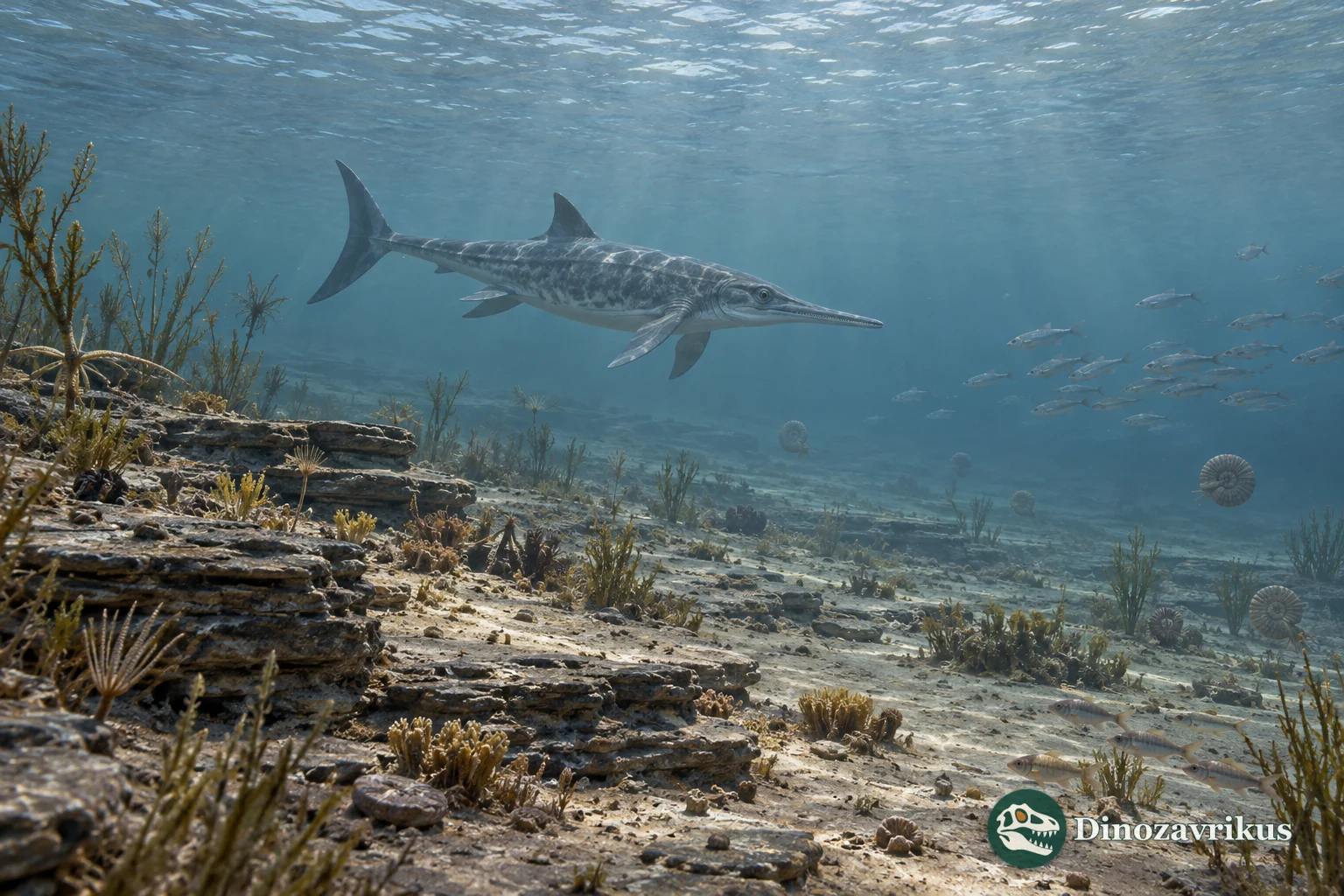
The fossils do not preserve stomach contents, prey remains, reproductive evidence, swimming behaviour, skin or colour. The long snout and shoulder anatomy can inform anatomical comparisons, but not a precise diet or swimming speed. The artwork is a cautious reconstruction of an ichthyosaur body plan, not a photograph of either museum specimen.
The Early Cretaceous Sveltonectes and Early Triassic Thaisaurus provide useful comparisons across time. Their different ages and skeletons do not imply that Wahlisaurus was an intermediate stage in a straight evolutionary sequence.
Frequently asked questions
Where was the Wahlisaurus holotype found?
It came from near Normanton on Soar in Nottinghamshire, England. The New Walk Museum acquired the fossil in 1951.
What distinguishes Wahlisaurus from other ichthyosaurs?
The original diagnosis combines a long slender snout, an overbite and distinctive openings and notches on the coracoid.
What is the second known specimen?
BRSMG Cg2405 is a nearly complete right coracoid from Somerset. It is about 20% longer than the holotype coracoid but does not reveal total body length.
Did Wahlisaurus live in the Triassic or Jurassic?
The holotype is lowermost Hettangian, in the Early Jurassic. The referred Somerset coracoid is near the period boundary and was interpreted as probably latest Rhaetian, with uncertainty retained.