

Cynotherium was an extinct island canid of Pleistocene Sardinia and Corsica. The best known species, C. sardous, left skulls, teeth and parts of the skeleton, and researchers have sequenced one ancient genome. It was smaller than many mainland canids and combined unusual skull proportions with familiar dog-family anatomy. The cover is an artistic life reconstruction, not a picture of a named fossil individual.
The large island ochotonid Prolagus lived in the same fauna. Skull, teeth and limb anatomy have led to the hypothesis that Cynotherium hunted small, quick prey including Prolagus. That is an ecological inference, not evidence that every individual ate only one species.
Quick facts
| Family | Canidae |
|---|---|
| Best studied species | Cynotherium sardous Studiati, 1857 |
| Earlier named form | C. malatestai from Sardinian deposits |
| Islands | Sardinia and Corsica |
| Age | Middle and late Pleistocene |
| Material | Skulls, teeth, skeletal bones and ancient DNA |
What can the fossils tell us?
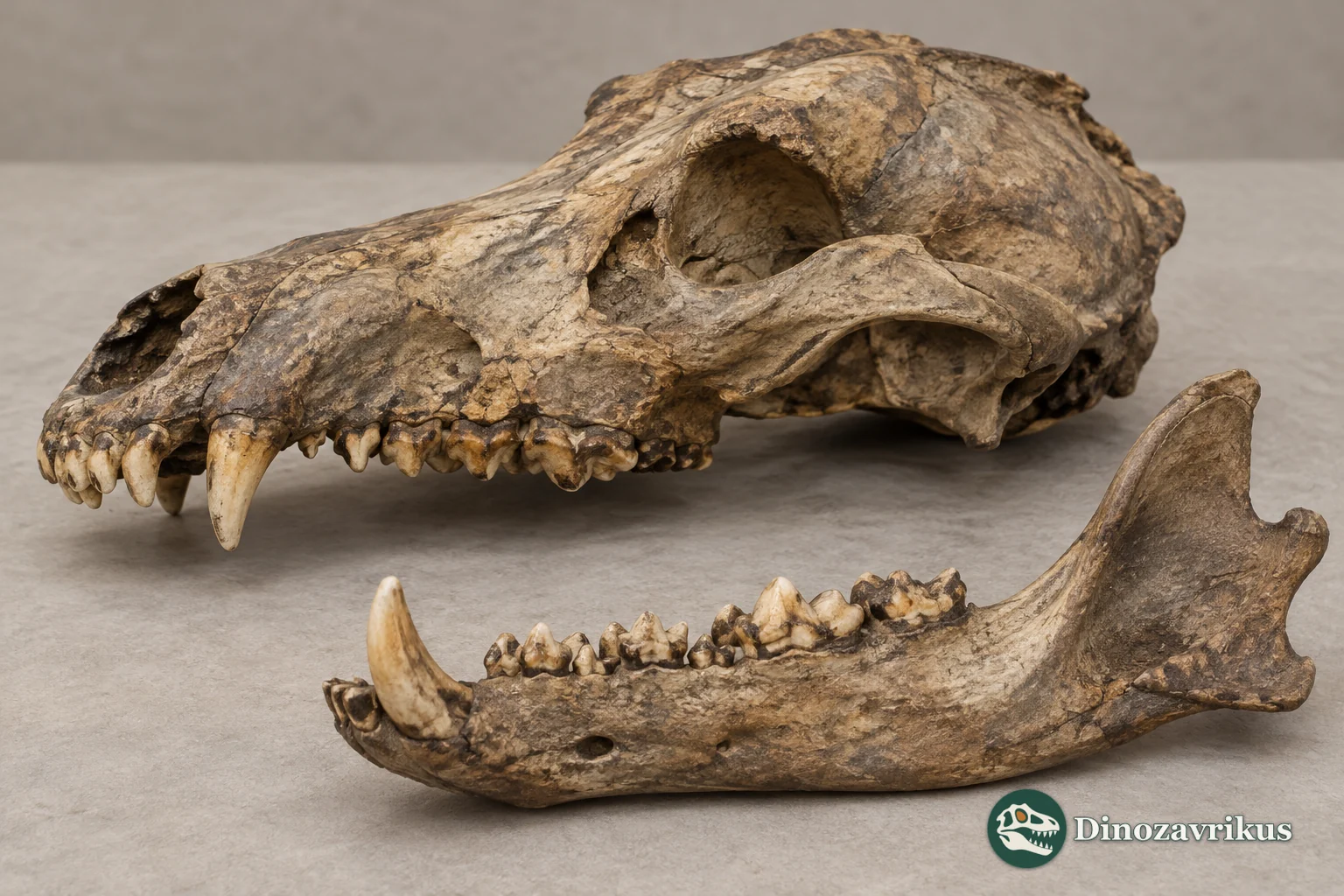
Comparison of a Corbeddu skull with living and fossil canids revealed distinctive proportions. Bone shape does not establish coat colour or a witnessed hunting technique.
A roughly 21,100-year-old genome places Cynotherium on a distinct island branch close to the Asian dhole lineage. A divergence date is a genetic model estimate, not a dated island arrival.
Micro-CT identified about 2.25 cochlear turns in the studied specimen. That suggests altered frequency sensitivity but cannot reconstruct the sounds of prey or the animal's behaviour.
Cave skulls and a complicated ancestry
A well-preserved skull from Corbeddu Cave was compared with numerous living and fossil canids. Its broad muzzle and relatively small temporal fossa distinguished the island form, while comparisons linked it closely to material from Dragonara Cave. A near-complete mounted Dragonara skeleton helps show body proportions, but one mount does not define the size of every island population.
Earlier Sardinian jaw material has been named C. malatestai. The taxonomic boundary needs direct comparison of specimens. Researchers once proposed ancestry from mainland forms such as Xenocyon on morphological grounds. Similar teeth can reflect inherited traits or adaptation to food; they do not by themselves identify the precise colonist.
What a genome and a tiny ear structure add
A genome from an approximately 21,100-year-old individual places Cynotherium on a distinct island lineage closest among sampled living canids to the Asian dhole. A genetic analysis estimated the lineage split at about 885,000 years ago and detected later gene flow. These are model-based estimates, not direct dates for the first arrival on Sardinia, and the fossil canid was not simply a modern dhole.
Micro-CT of the petrous bone supplied another kind of evidence. The examined cochlea made about 2.25 turns, fewer than those compared in living canids. The authors inferred limited low-frequency hearing. They could not determine which senses the animal actually used to find prey or what calls it produced. DNA addresses relationship while ear anatomy suggests sensory function; neither is an observation of behaviour.
Possible prey and an incomplete final chapter
Dental wear and muscle attachment patterns support predominantly animal food. Hunting Prolagus remains a plausible specialization, not a recovered record of each kill. Other island mammals included Rhagamys and the deer Praemegaceros. Their presence in the same fauna does not tell us how often Cynotherium encountered or attacked them.
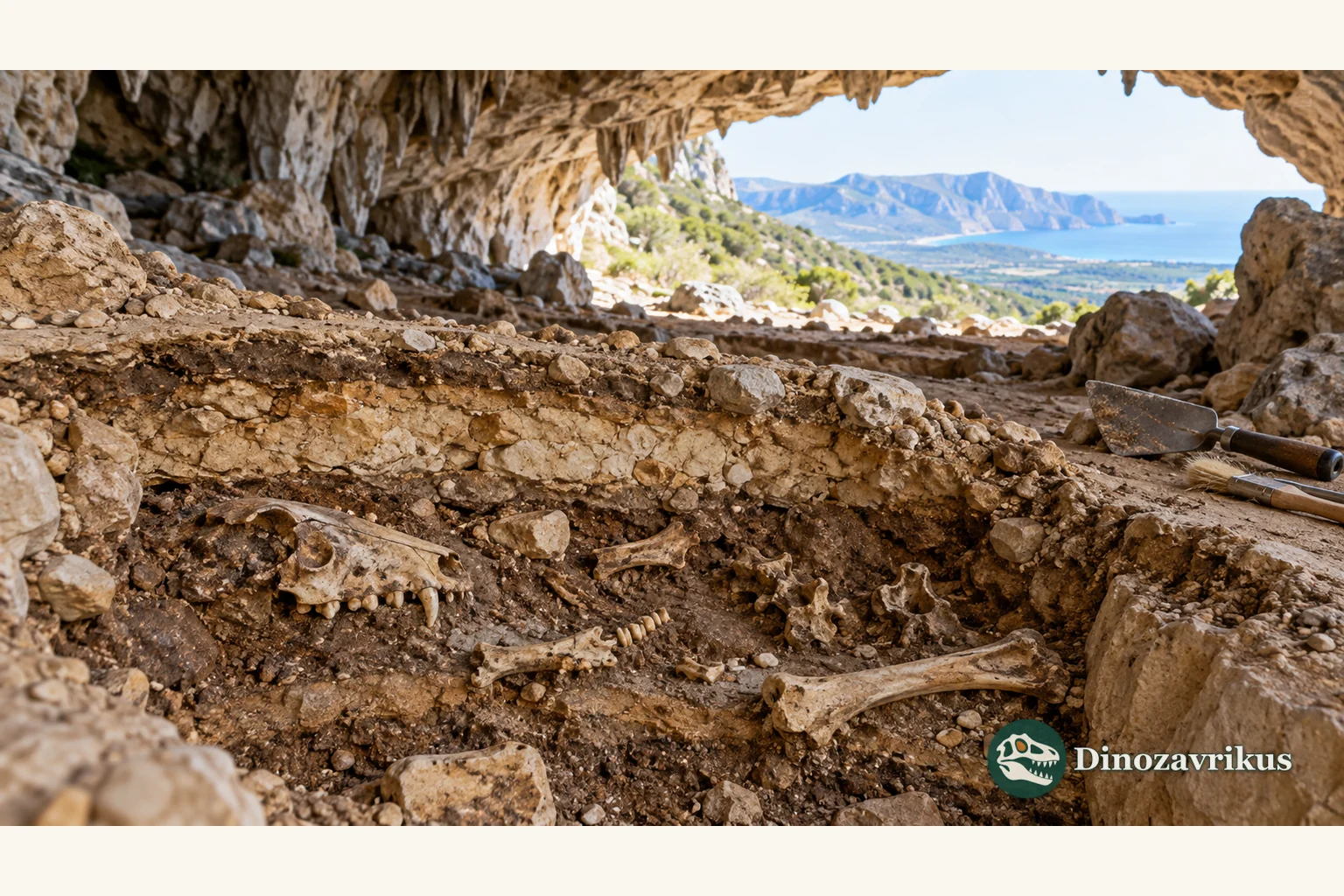
Directly dated late canid fossils are sparse. A latest known specimen is a minimum bound on survival, not the date when the last animal died. The present chronology does not establish one extinction cause, including human arrival or a single climate event. The cave illustration below explains fossil preservation; it is not a documentary image of Corbeddu.
Frequently asked questions
Was Cynotherium an ordinary wolf?
No. It was a distinct island canid lineage with unusual skull proportions and a genome close to the Asian dhole lineage.
Where have its fossils been found?
Sardinia and Corsica, with important Sardinian skull and skeletal material from Corbeddu and Dragonara caves.
Did it hunt Prolagus?
Anatomy and island fauna support this hypothesis, but no fossil documents every individual's prey.
Do we know why it disappeared?
No. Sparse late fossils do not establish a precise extinction date or a single cause.