

Ellipsodon is a genus of early placental mammals from Paleocene North America, represented chiefly by teeth and jaw fragments. Its taxonomic history is unusually instructive: species names moved between genera, some were treated as synonyms, and the composition of Ellipsodon changed as researchers re-examined dental characters.
The genus belongs in the ancient mammal catalogue. Its classification has intersected with that of Promioclaenus, while comparisons with Haplaletes and Litocherus show why isolated teeth need careful, position-by-position study.
Quick facts
| Scientific name | Ellipsodon Scott, 1892 |
|---|---|
| Group | Early placental mammal; higher placement has varied |
| Age | Paleocene; the included names come from different faunas |
| Range | North America, including Montana and New Mexico |
| Evidence | Tooth rows, jaw fragments and isolated teeth |
| Example specimen | USNM 9280, right lower jaw of E. aquilonius |
| Species limits | Several historical combinations were transferred or synonymized |
| Body size and diet | No secure body estimate or specific menu is established |
What can the jaws and teeth tell us?
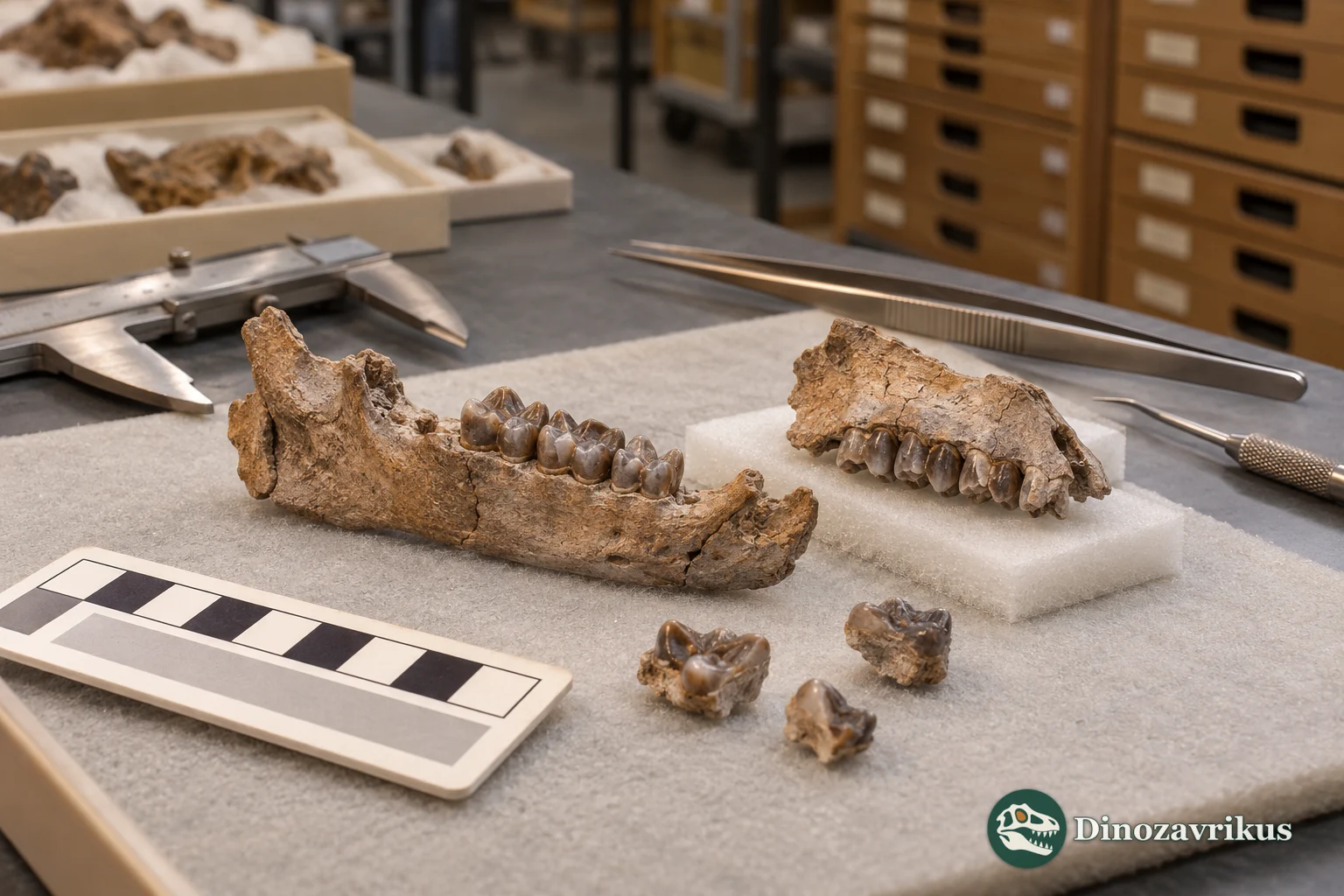
Simpson described Ellipsodon aquilonius from right lower jaw USNM 9280 and listed USNM 9567 as an upper-jaw paratype. These are type specimens for a species, not a complete skull or a name-bearing specimen for the entire genus.
A 2007 revision described reduced front cheek teeth, simple premolars and enlarged, inflated principal cusps on the first molars. The proposed crushing function is an anatomical interpretation; no stomach content or diagnostic feeding trace establishes a particular food.
Ellipsodon aquilonius was transferred to Promioclaenus and later treated as a synonym of P. acolytus by some authors. Ellipsodon priscus became Bomburia priscus and later Bomburodon priscus. Those changes concern classification, not new fossils.
The type material of E. aquilonius came from the Fort Union Formation in Montana. Other published Ellipsodon records are associated with early Paleocene New Mexico faunas. A local age cannot be assigned automatically to every historical species name.
The name and its type material
William Berryman Scott introduced Ellipsodon in 1892. Later work placed the genus among early placental mammals described historically as “condylarths”, a broad and now problematic assemblage rather than a settled natural branch.
George Gaylord Simpson named Ellipsodon aquilonius in 1935 from the Fort Union Formation in central Montana. Its holotype, USNM 9280, is a right lower jaw preserving teeth from P3 to M3 and the alveoli of more anterior teeth. Albert C. Silberling collected it. Simpson listed right upper jaw USNM 9567, collected by James W. Gidley, as a paratype. These remains document one species and do not form a complete skull.
Dental anatomy and functional inference
Thomas Williamson and Thomas Carr's 2007 revision used new material from the early Paleocene of New Mexico to reassess Ellipsodon and the related genus Bomburia. They described reduced mesial cheek dentition, simple and reduced premolars, and enlarged principal cusps on the first molars. The third molars were more reduced than in other mioclaenids compared in that study.
The authors interpreted the swollen cusps as a surface suited to crushing. That is an inference from tooth shape, not proof of a particular diet. No diagnostic gut contents or feeding trace establishes a specific menu for the genus. Tooth position and wear also matter: one isolated molar may not preserve the combination needed for confident species identification.
Species names, transfers and synonymy
The name E. aquilonius did not retain one classification. Wilson referred it to Promioclaenus in 1956, and later systematic accounts treated it as a junior subjective synonym of P. acolytus. Thus an older list of Ellipsodon species may include a name that is not accepted as a separate member today.
Ellipsodon priscus, described by William D. Matthew in 1937, has another history. Its holotype is MCZ:VP:VPM-20627, now catalogued under Bomburia prisca after later identifications. Williamson and Carr proposed the replacement name Bomburodon in 2012 because Bomburia was preoccupied. Published lists also include names such as E. inaequidens, E. grangeri and E. yotankae, but their status should be read in the context of the particular revision being followed.
Localities and Paleocene age
The type of E. aquilonius came from the Gidley and Silberling Quarries in the Fort Union Formation, Crazy Mountain Field, Montana. Simpson called the horizon Middle Paleocene. Other fossils assigned to Ellipsodon have been reported from early Paleocene New Mexico faunas. These are different basins and stratigraphic settings, so a genus-level range combines records whose assignments have not always been stable.
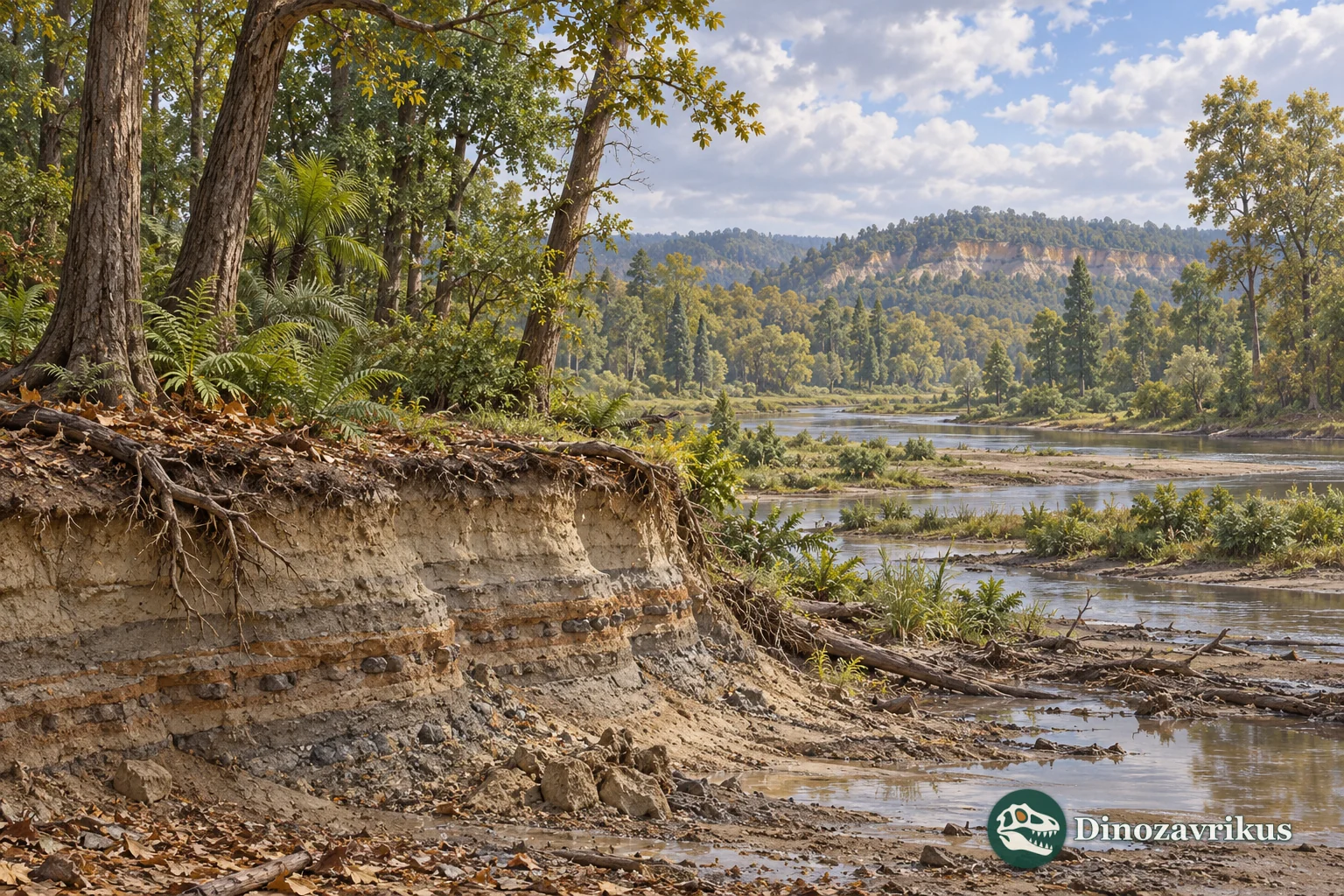
Fossils are dated through their bed position, associated fauna and independent geological evidence. A jaw fragment does not carry an exact numerical date by itself. The woodland and river-margin scene shown here is a broad palaeoenvironmental illustration, not a reconstruction of one named quarry.
Classification and what remains unknown
Dental characters were used to place Ellipsodon among early placental mammals, but family assignments have varied, including Hyopsodontidae and Mioclaenidae. Such disagreement reflects different character sets and taxonomic frameworks; the names do not correspond to different fossils.
The known material does not provide a complete skeleton. Body length, mass, limb proportions and gait cannot be reconstructed securely from the jaws. The cover shows one generalized small mammal, while its coat, colour, ears and behaviour remain artistic choices rather than fossil observations.
Frequently asked questions
When did Ellipsodon live?
Fossils assigned to the genus come from Paleocene North American localities. The age should be checked for each species and site because historical assignments changed.
What is the best-known specimen?
Holotype USNM 9280 is a right lower jaw of Ellipsodon aquilonius with teeth P3–M3 and anterior alveoli. It is a type specimen for that species, not for the whole genus.
Why did species leave the genus?
Researchers reinterpreted dental similarities. E. aquilonius was referred to Promioclaenus and later synonymized with P. acolytus by some authors; E. priscus was moved into other generic combinations.
Can its diet be identified?
Not specifically. Molar morphology supports a hypothesis about crushing, but no diagnostic gut content or feeding trace establishes a particular food.