

Periphragnis is an extinct South American notoungulate known from fossil localities in Patagonia and central Chile. Its taxonomic history is complex: species were first described in several different genera, then transferred to Periphragnis or retained with a question mark. Each species therefore needs to be considered alongside its type material and age rather than treated as equally well known across one continuous interval.
The genus is included in the ancient mammal catalogue. Comparisons with the notoungulates Isotemnus and Notopithecus help illustrate the diversity of South American hoofed mammals, while the later toxodont Nesodon belongs to a much younger part of that history.
Quick facts
| Scientific name | Periphragnis Roth, 1899 |
|---|---|
| Type species | P. harmeri Roth, 1899 |
| Group | Notoungulata; basal toxodontian forms |
| Age | Late middle Eocene to early Oligocene, by species and locality |
| Range | Patagonia, Argentina, and central Chile |
| Known remains | Teeth, jaw and skull fragments, and isolated postcranial bones |
| Species discussed | P. harmeri, P. palmeri, P. exauctus, P. vicentei |
| Main uncertainty | Generic assignments and the limits of basal toxodontian groups |
How should the Periphragnis fossil record be read?
Much of the record consists of teeth and jaw fragments. Shape can support comparisons, but tooth wear, damage and shared ancestral features can make a single character insufficient.
Historical revisions transferred forms first named as Calodontotherium, Asmodeus or Proasmodeus. A changed combination does not mean all referred specimens are equally diagnostic.
Material is assigned to Mustersan and Tinguirirican localities, broadly from the late middle Eocene to early Oligocene. This is a summary of different species and places, not a continuous record of one population.
Isolated limb elements enter comparative studies of basal toxodontians. They help assess joints and support but do not establish exact running speed, behaviour or body mass for the whole genus.
The name and changing classifications
Federico Roth introduced Periphragnis in 1899 and designated P. harmeri as its type species. Early studies of South American ungulates drew on Patagonian collections made by expeditions and individual researchers. Many fossils were incomplete, and some names were based on limited parts of jaws or skulls.
Later authors transferred several forms into the genus. Calodontotherium palmeri Roth, 1903 became Periphragnis palmeri in Simpson’s 1967 revision. Asmodeus circunflexus Ameghino and Proasmodeus exauctus Ameghino also entered discussions of the genus, but the confidence of those assignments differs. The referral of circunflexus was treated tentatively because its fit with the type genus was not secure.
A 2022 taxonomic review compared Patagonian and Chilean material and revisited name-bearing specimens. The history is not simply an ever-growing list: older names have been treated as synonyms, doubtful forms or material requiring reassessment. A synonym proposed in one revision is not automatically accepted by every later study.
Species and geological age
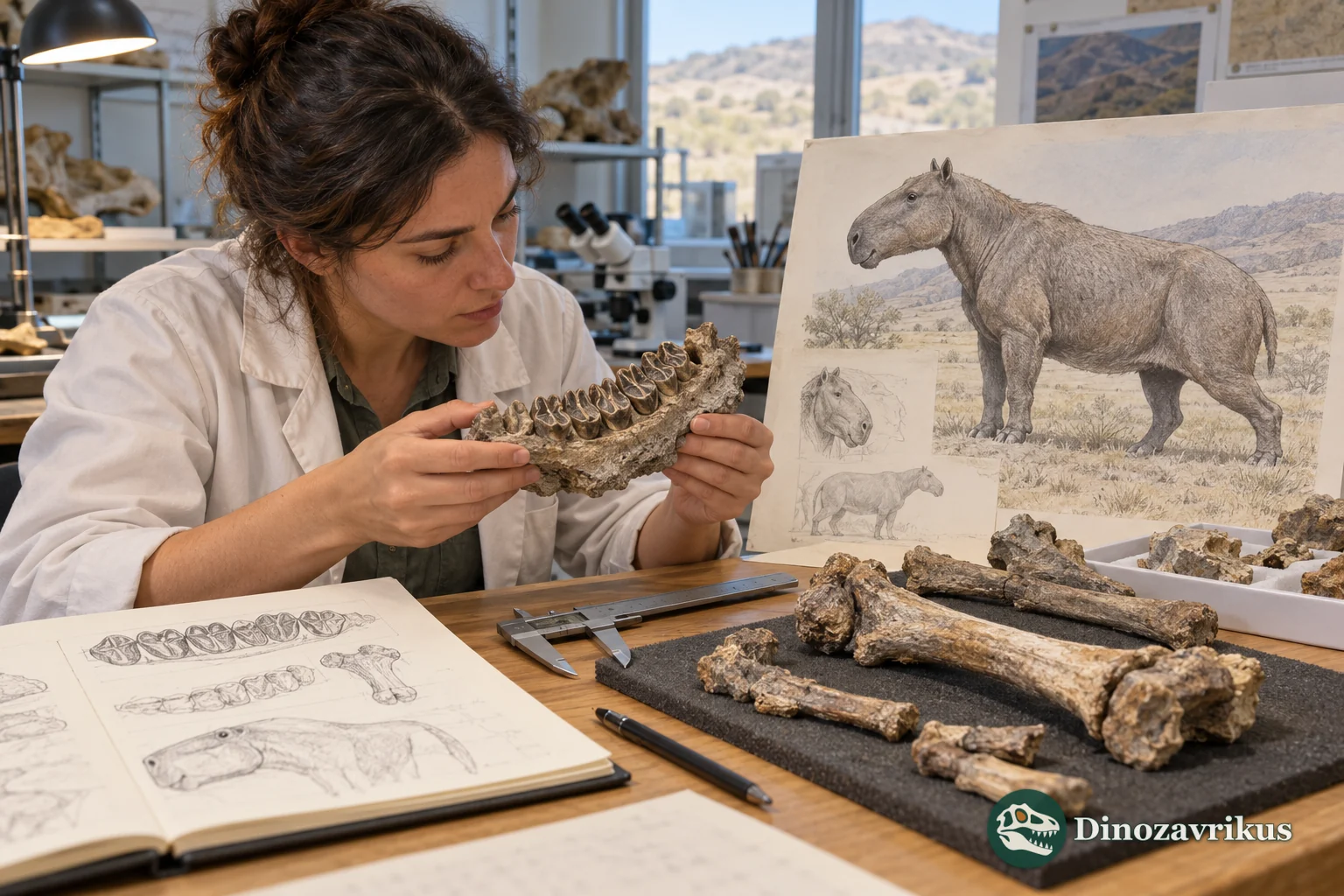
P. harmeri is the type species and anchors the use of the genus name. Historical records associate it with Patagonian deposits, where accurate stratigraphic context matters for each specimen. Mustersan and Tinguirirican are South American land-mammal intervals broadly correlated with the late middle Eocene and early Oligocene; they do not represent an uninterrupted record of one species.
P. palmeri is based on material first described as Calodontotherium palmeri. Teeth and jaw remains support comparisons, but they do not provide the same anatomical completeness as an articulated skeleton. P. exauctus began as Proasmodeus exauctus. P. vicentei was described from the early Oligocene Tinguiririca locality in Chile, extending the discussion of the genus into younger strata and a different region.
Names in older literature need to be checked against their original descriptions and types. A new combination changes the scientific name attached to a type; it does not change the specimen. Tentative or doubtful forms should not be presented as equally secure species.
Teeth, jaws and taxonomic limits
Dental and jaw fragments provide much of the diagnostic evidence. Researchers compare crown outline, ridges, cusp positions, tooth-row proportions and wear. A worn tooth may look different from a younger one, while damage can obscure details needed to distinguish closely related notoungulates.
The genus has traditionally been associated with Isotemnidae and basal toxodontians. Isotemnidae in its broad historical sense may be paraphyletic: forms grouped by primitive similarities may not constitute one exclusive evolutionary branch. The name remains useful in the history of classification, but it should not be mistaken for a settled phylogenetic result.
Limbs, size and likely ecology
Although teeth dominate the record, some limb bones expand anatomical comparisons. An intermediate phalanx assigned to Periphragnis harmeri and other basal toxodontian material have been used to study joints and weight-bearing. A single bone cannot establish exact running speed, behaviour or the animal’s full outline.
Comparative literature includes mass estimates in the hundreds of kilograms for some large basal toxodontians, calculated from bone dimensions and living or fossil analogues. Those values should not be transferred uncritically to every Periphragnis species: no single complete skeleton provides a direct mass for the genus. Artistic reconstructions are therefore informed hypotheses rather than exact portraits.
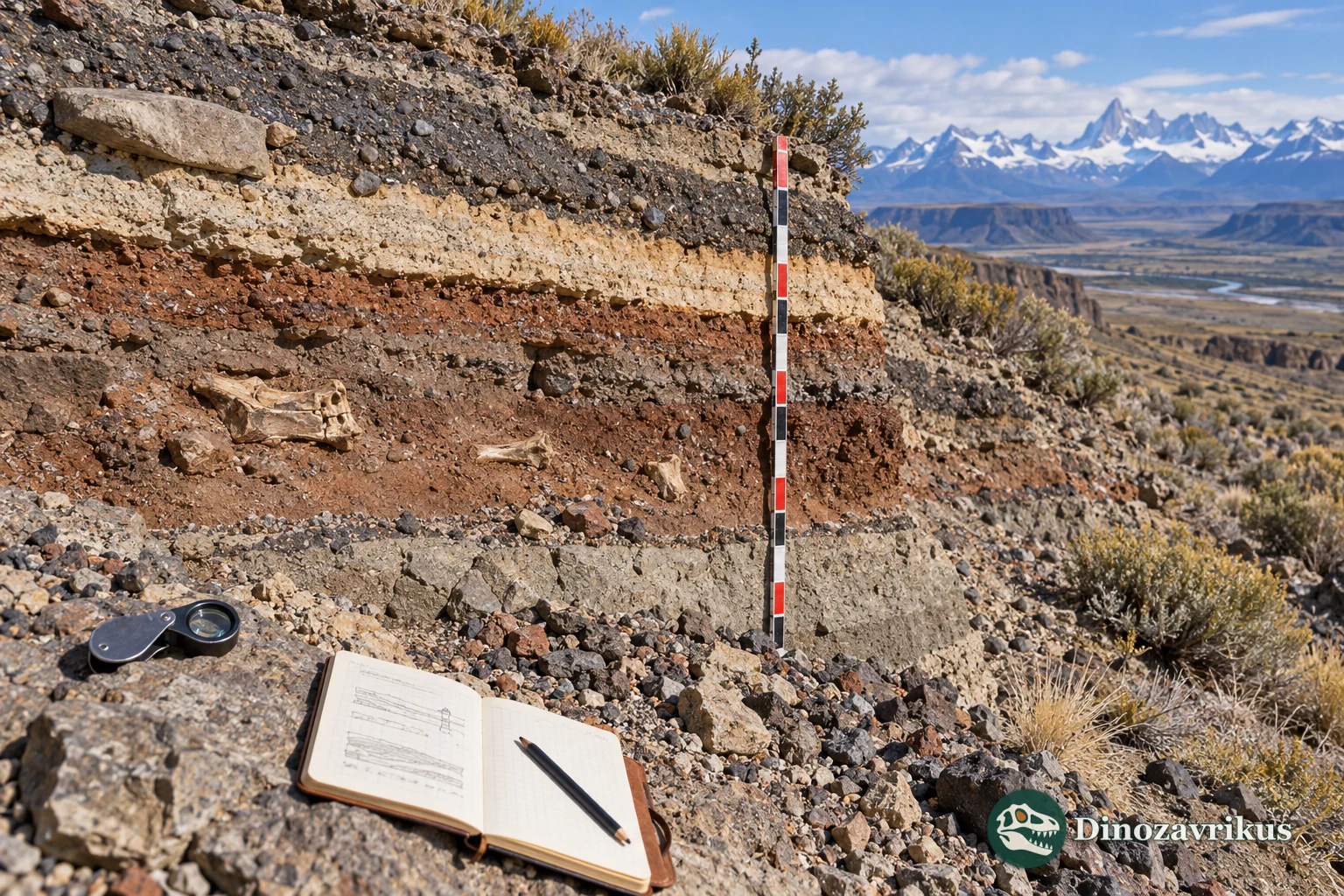
The broad time span and scattered fossils do not support one unchanging life-history account. Environments are reconstructed from the sediments and associated fauna at each locality. Early Oligocene Chile should not be treated as the same ecosystem as older Patagonian deposits.
What is established and what remains open
The genus, its type species, several dental and postcranial finds, and records from more than one South American interval are established parts of the literature. Revisions continue to test which older names and specimens belong in the genus. A complete species roster, precise size for every form and detailed diet or behaviour remain less certain.
This distinction matters: a new name combination is not a new fossil discovery, and a similar crown does not by itself prove close relationship. Periphragnis illustrates how palaeontologists build a profile by keeping individual fossils and their contexts distinct.
Frequently asked questions
When did Periphragnis live?
Different species and specimens are assigned to intervals from the late middle Eocene to the early Oligocene. This does not mean a single population persisted throughout that span.
Where have Periphragnis fossils been found?
The records come from Patagonia in Argentina and central Chile, including the early Oligocene Tinguiririca locality.
Which species are included in the genus?
Revisions discuss the type species P. harmeri, transferred P. palmeri and P. exauctus, and the Chilean P. vicentei. Some other combinations are tentative or disputed.
Can its size and diet be estimated precisely?
Fragmentary remains do not establish exact body size for every species. Teeth support comparisons of anatomy and wear, but a specific menu and behaviour require independent evidence.