

Scelidodon is a name applied to extinct South American ground sloths with elongated skulls and distinctive jaws. Fossils from several Pleistocene localities have been assigned to it, but the genus has not had identical limits in every classification. A skull from the Tarija valley in Bolivia offers stronger evidence than an isolated tooth; neither kind of fossil reveals the coat of a living sloth.
The closely related Scelidotherium illustrates the classification problem. Their skulls share a long tubular profile, and older assignments moved species between the genera. A current identification depends on the combination of observable characters, not solely on a nineteenth-century label.
Quick facts
| Group | Mylodontidae, Scelidotheriinae |
|---|---|
| Genus named | Scelidodon Ameghino, 1881 |
| Historical type species | Scelidodon copei |
| Key specimen | Tarija skull and mandible MNHN TAR 1260 |
| Time | Pleistocene, varying by site |
| Region | South America |
What can the fossils tell us?
MNHN TAR 1260 preserves a skull and mandible used to compare nasal and jaw form. The bones cannot establish fur colour or social habits.
Revisions compare cranial, dental and postcranial characters. A single worn tooth may not separate close scelidotheriines reliably.
A 2009 revision separates Scelidodon from Scelidotherium; other authors combined some names or reassigned material. Older labels need to be read alongside the chosen revision.
A name from a difficult sloth group
Florentino Ameghino introduced Scelidodon in 1881. A review of Argentine scelidotheriines published in 2009 retained both Scelidodon and Scelidotherium, distinguishing them by skull, teeth and postcranial anatomy. Other researchers regarded some named species as synonyms or placed related Brazilian fossils with Catonyx. These are competing taxonomic treatments rather than a record of the same animal changing its anatomy.
The historical type species is S. copei. The frequently discussed S. tarijensis is based on a different line of material. Not every old assignment has a precise original locality or layer, so a refined anatomy does not create an exact age for poorly documented museum specimens.
The Tarija jaw and its limits
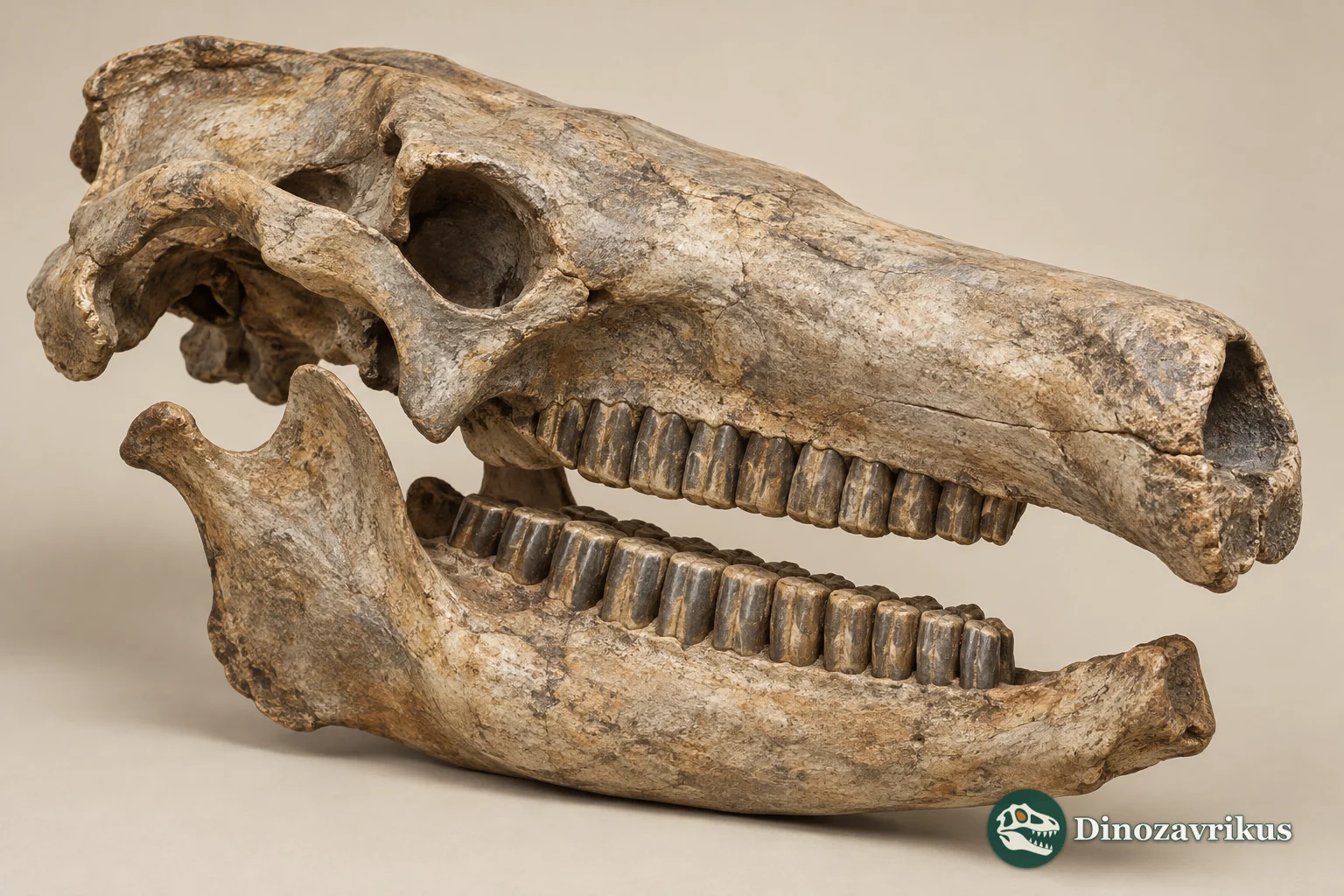
The specimen MNHN TAR 1260 from the Bolivian Tarija valley includes an associated skull and lower jaw attributed to S. tarijensis. Descriptions emphasize the domed frontal region, rounded nasal opening and robust mandible with an upward-sloping symphysis. These are preserved bony traits, not features guessed from a life drawing.
The compressed cheek teeth are consistent with processing plants, but the exact plants eaten by this individual are not identified by the jaw alone. Mylodon offers a comparison within ground sloths without being another name for Scelidodon. The image below is an interpretive reconstruction of skull anatomy, not a photograph of MNHN TAR 1260.
Localities, chronology and appearance
The 2009 Argentine review assigned S. tarijensis to Ensenadan–Bonaerian occurrences and S. chiliense to younger records, while leaving some fossils at genus level only. These regional faunal ages cannot be treated as direct dates for every skull. Chilean, Bolivian and Argentine records also should not be collapsed into a single species range at one moment.
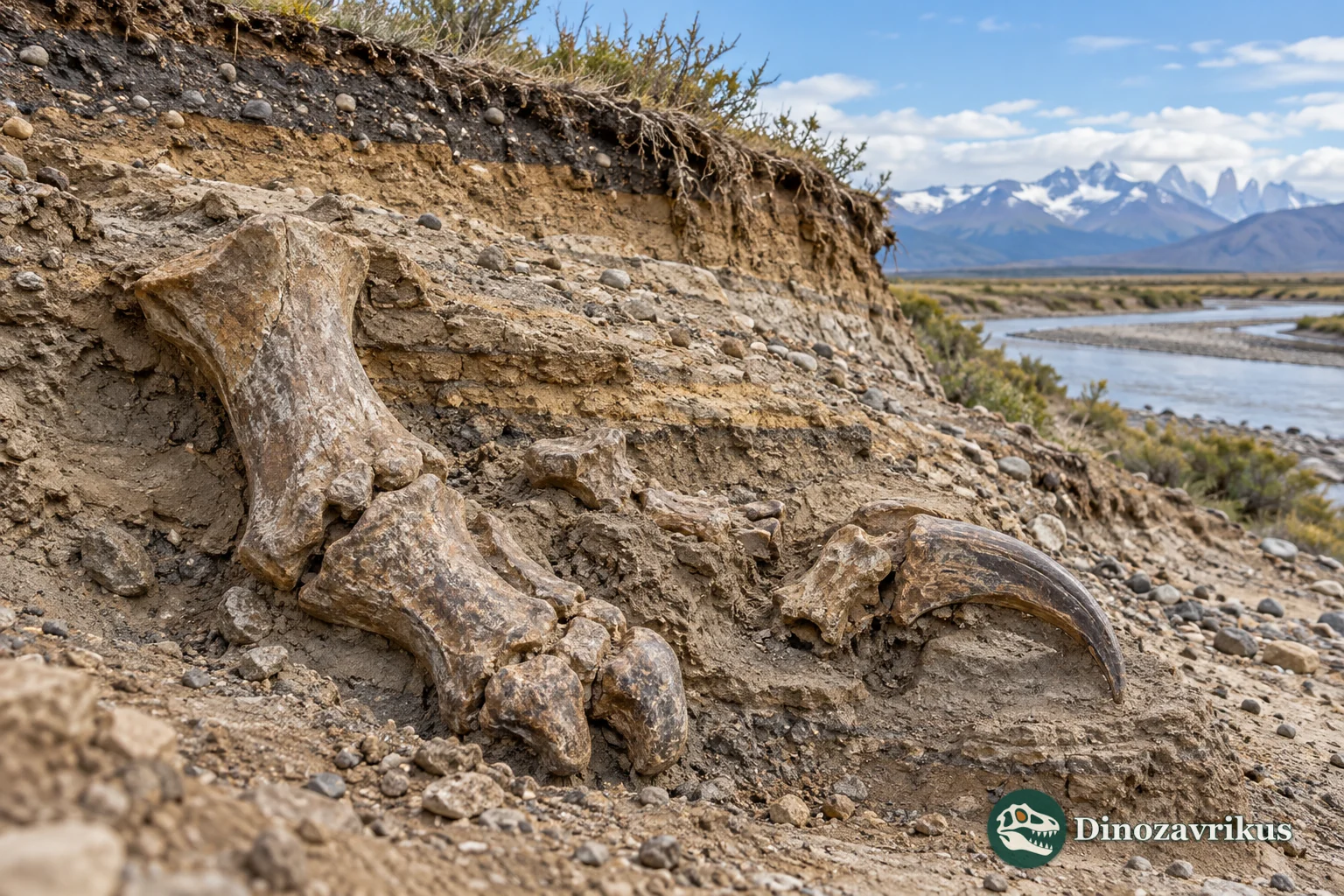
The fossil skull supports a long muzzle; comparative skeletons support a heavy terrestrial sloth with strong limbs. Fur length, colour and exact movement in the cover remain artistic choices. The field scene below explains the importance of geological context but is not a documented photograph of a Scelidodon excavation.
Frequently asked questions
Was Scelidodon a dinosaur?
No. It was a mammal in the extinct ground-sloth lineage.
Why is its genus disputed?
Closely related sloths share many characters, and revisions differ over which skull, tooth and limb features justify separate genera.
What is preserved from Tarija?
The important specimen MNHN TAR 1260 preserves an associated skull and lower jaw.
Can the skull tell us its fur colour?
No. Bone anatomy does not preserve the colour or length of the animal's coat.